

Your child is screaming in the store. You don't know what to do. Give them candy — and you teach them that screaming works. Punish them — it's pointless, they don't understand what for. People around you are staring. You feel trapped.
Sound familiar? Then this article is for you.
Children with autism aren't "throwing tantrums" or "manipulating." Behind every difficult behavior — screaming, hitting, destroying — there's a specific, logical reason. The child is facing a situation they can't understand or put into words, and reacting in the only way available to them.
Below are 10 types of difficult behavior and concrete strategies that actually help. Not theory — practice: with real examples and step-by-step actions.
Four principles: the foundation of any behavior correction
Before we get into specific situations, remember four rules. They apply always — for any type of behavior.
1. Understand the cause first
A child with autism's behavior can look strange and illogical. But there's always a reason behind it. It's a reaction to a situation they can't understand, explain, or change. Your job isn't to suppress the behavior — it's to figure out what's driving it.
2. Respond immediately — or head it off
The best strategy is to prevent problem behavior before it starts. If that doesn't work, act within the first few seconds. Punishment "after the fact" doesn't work: the child has already gotten satisfaction from the action and doesn't connect it to your reaction.
Many parents notice: a smack doesn't scare the child. He may laugh or even look forward to it — as a familiar part of the routine. In that case, punishment turns into a reward.
3. Act in a way the child can understand
Long explanations don't work. Yelling distracts for a moment, but the child gets used to it. Anger might even seem funny and interesting to him — especially if he's usually ignored, and suddenly becomes the center of attention during "bad" behavior.
What works: short actions. Hug him, lead him away, redirect him. One action plus one word — that's enough.
4. Be consistent
If you forbid a behavior sometimes and let it slide other times, the result will be worse than if you'd done nothing at all. Inconsistency causes more problems than being too strict or too soft.
Tip: pick the 2-3 most serious problems and focus only on those. Let the rest go for now. This gives the child clear boundaries — and gives you the strength to hold the line.
1. Meltdowns and screaming
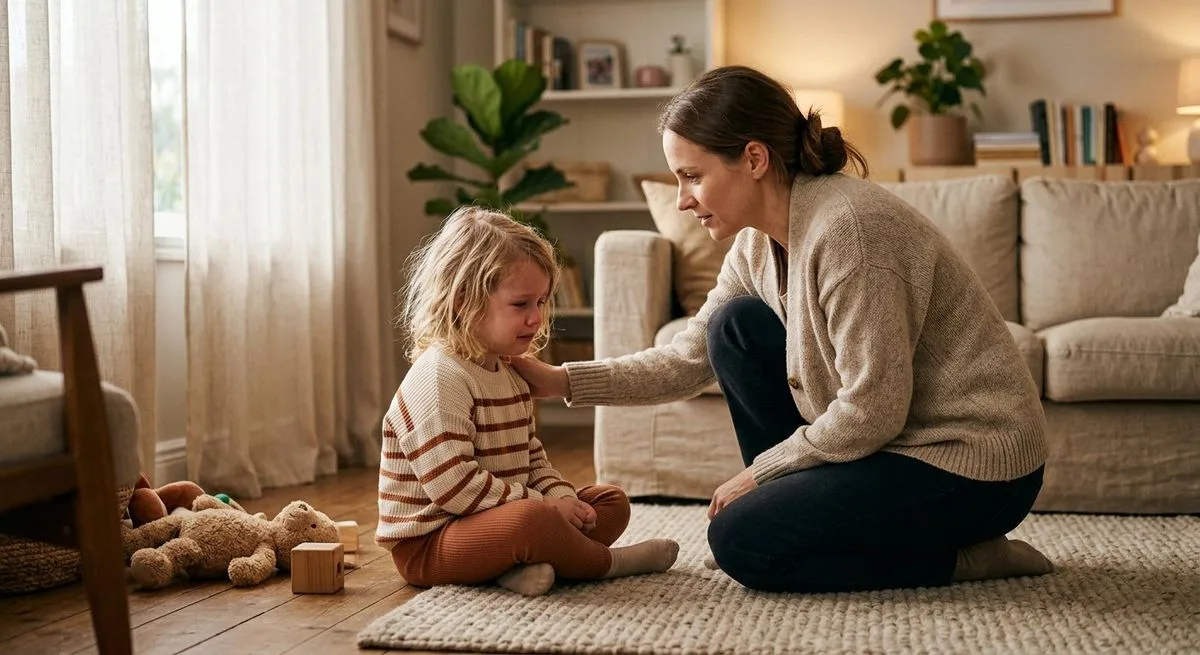
Why it happens. The child doesn't have the words to say "I want that," "I feel bad," or "I don't understand what's happening." Screaming is the only tool available. It can go on for hours: stomping, throwing things, banging his head.
What to do.
In public — lead the child away. No explanations, no negotiating. Just remove them from the situation.
At home — use the extinction method:
- If there's no self-injury — don't react. At all. No attention while the child is screaming.
- The moment he calms down — immediately give attention, affection, praise. A small reward is fine too.
- The point: the child learns that screaming doesn't get results, but calm does.
This method takes, as specialists put it, "nerves of steel and the ears of the deaf." And time. But it works.
What NOT to do.
- Don't give candy or a toy "to make him stop." Otherwise the child learns: if you want something, scream for it.
- Don't hit or scare him. A child who struggles to understand speech won't connect the punishment to the cause.
As the child gets older and starts understanding individual words, a firm voice and clear tone can work. But only if you're consistent.
2. Destructive behavior
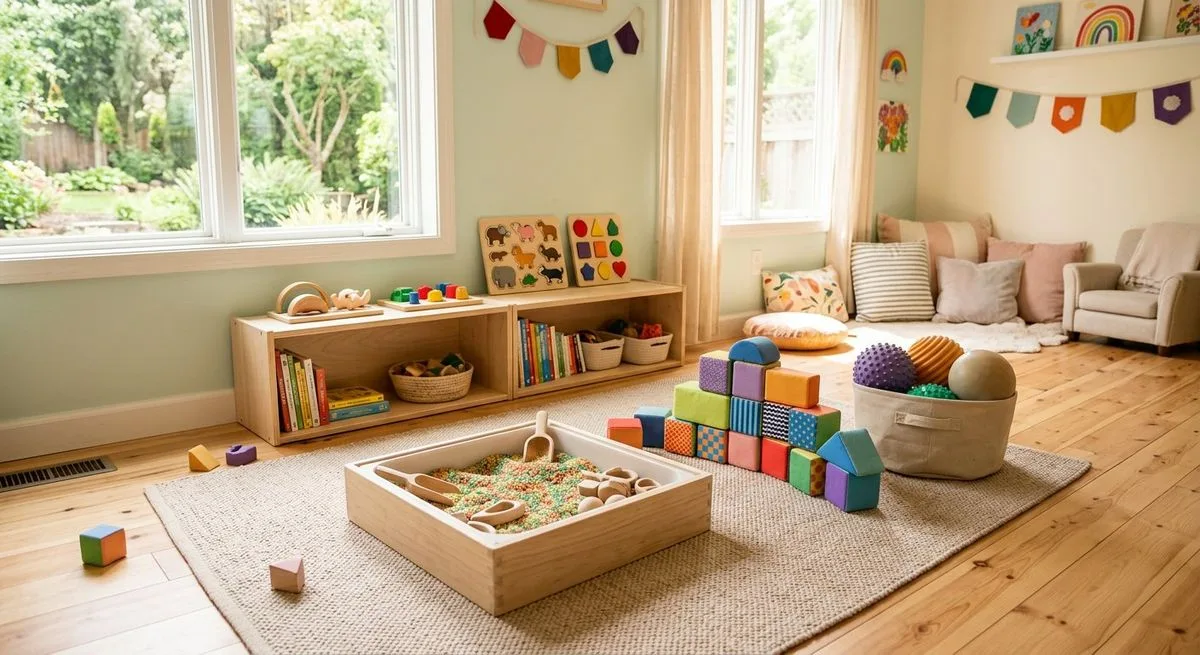
Why it happens. Children with autism often don't know how to play constructively. They explore the world through the simple properties of objects: what happens if I tear this? What if I throw it? What sound will it make?
He tears up books and curtains, smashes light bulbs with blocks, smears things on the wall that shouldn't be smeared. Not out of anger — out of curiosity. He doesn't understand that big things don't fit into small ones, and breaks objects trying to test that.
What to do.
Change the environment:
- Remove fragile and valuable items. Either hide them or put them somewhere out of reach.
- Give him sturdy, pleasant-to-touch, large objects that can be thrown, spun, taken apart.
- If possible, set aside a separate zone or room where he can do whatever he wants.
When destruction starts:
- Yelling and anger are useless. So is spanking.
- Gently take his hands, redirect him. Hug him, offer to tickle him, start a favorite game. This isn't "giving in" — it's redirecting.
Long term:
- Fill the day with activities: drawing, simple chores, structured games. A child who is busy has no time to destroy things.
- If the child already understands speech, explain ownership: "That's Dad's," "We don't touch things that aren't ours." Praise him every time he holds back.
In severe cases, don't leave the child unsupervised. Keep watching until the behavior decreases.
3. Socially unacceptable behavior

Why it happens. A child with autism doesn't understand unspoken social rules. He doesn't know how to adapt to a situation, and may say or do something that makes his parents want to disappear.
He might take an item off a shelf and walk out without paying. He might take his pants off in public. He might loudly comment on a stranger's appearance. Not because he's badly behaved — because he doesn't know "you can't do that."
What to do.
During the incident:
- Calmly but firmly stop him. Take his hand, say something short: "No," "Don't," "Don't touch." Skip the long explanations — they won't land.
- Lead him away from the situation if needed.
Systematically:
- Make a list of specific rules and practice them through role play: "the store," "visiting someone," "the bathroom," "greetings."
- A child with autism who has internalized a rule will, as a rule, follow it strictly. The difficulty is in teaching, not discipline.
Important — about yourself:
- The child copies everything. Swear words, a harsh tone, sharp gestures — he'll repeat them with frightening accuracy. And at the most inconvenient moment.
- Watch your own behavior. This isn't a lecture — it's a fact about how mirror imitation works in children with autism.
4. Rigidity: "Everything has to be the way it always is"
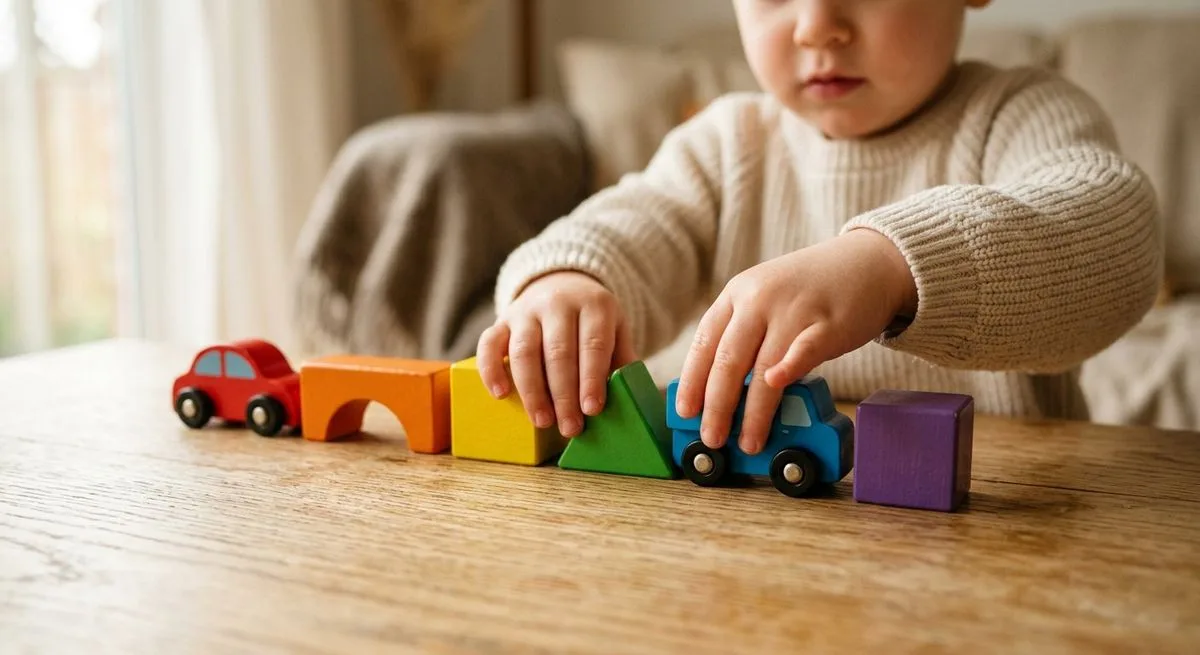
Why it happens. The world of a child with autism is chaotic and unpredictable. Fixating on order is an attempt to create an island of stability. He'll only sit in "his" spot, only walk "his" route, only eat from "his" plate.
Any change feels like a catastrophe. Because he doesn't know what comes next. And the unknown is frightening.
What to do.
Don't indulge the rigidity. Gently but persistently introduce changes — small, daily ones. Change the order of activities, the walking route, where objects sit on the table. One small change every day.
Prepare him for changes in advance. Before changing anything significant, let the child "enter" the new situation gradually.
A case from practice. A boy named Tang refused to part with a card he constantly held in his hand. When someone tried to take it away, he'd scratch his own face with his nails. A nurse spent several hours with him: gently, patiently, but firmly. She'd let go of his hands — and immediately catch them again if he reached for his face. In the end, Tang was able to be without the card and not hurt himself.
There was another approach too: every night while Tang slept, a small piece was cut off the card. Day by day it got smaller — until it disappeared completely. The child didn't even notice.
The key point: once you decide to break a rigid pattern, see it through. If you started changing a habit, don't back down. After a successful change, the relationship with the child usually only improves.
5. Fears

Why it happens. Many children with autism are afraid of things that are objectively safe. Sometimes the cause is a first negative experience (new shoes rubbed his foot raw — and now he's afraid of any shoes). Sometimes it's sensory overload (a loud sound, bright light, an unpleasant touch).
What to do.
For fears rooted in negative experience — desensitization. Gradually bring the child closer to the source of the fear, step by step.
Example: a child is afraid of shoes. He loves hard-boiled eggs. During mealtime, a nice pair of shoes is placed nearby. Before he finishes eating, the shoes are removed. This is repeated many times. Then the shoes are put on him during the meal. Then they're left on longer. Eventually, buying new shoes becomes a happy occasion.
For sensory fears (noise, nail-clipping, hair-washing):
- Stay calm. Your anxiety transfers to the child.
- Redirect his attention: a favorite song, a soft toy.
- For clipping or washing: one adult holds him, another does the task. This isn't cruelty — it's a necessity.
A case from practice. One boy was terrified of the bathtub. No candy, no persuading helped. A new caregiver, not knowing about this, simply picked him up and put him in the water. His mother heard, in horror... laughter. And splashing. The boy was delighted. Sometimes a confident action works better than months of cautious habituation.
There's no single recipe. Sometimes you need a gradual approach, sometimes a decisive one. But you always need the parent's confidence. It transfers to the child.
6. No fear of real danger

Why it happens. A paradox: a child who's afraid of new shoes might, without hesitation, step into deep water, climb onto the roof, or run into the road in front of a car. The reason: he doesn't understand cause and effect. He doesn't know that height = falling, that a car = danger.
Many parents recall their child's first trip to the sea — he ran straight into the water, fully dressed. Those who love climbing become downright acrobatic about it: walking along ledges, hanging out of windows.
What to do.
- Environment. Install window guards, door locks, balcony barriers. Remove anything climbable from near windows.
- Rules. Teach concrete safety rules: crossing the street, handling fire, electricity. Repeat them again and again.
- Supervision. For children ages 2-5, this is the main strategy. Simply don't let them out of your sight.
- Emergencies. When there's danger, grab him and say one word: "No!" or "Stop!" Short and firm.
7. Strange movements and grimaces

Why it happens. Twisting fingers, rocking, jumping, unusual facial expressions — these are all forms of self-stimulation. The child gets sensory pleasure from these movements, or releases tension through them. In the specialized literature this is called "stimming."
What to do.
- Limit it by place and time. At home, in his own room — it's fine. Out in public, visiting someone — gently stop him. Take his hands, quietly say "hands down" or "stop." Gradually build the understanding: there are places where you don't do that.
- Keep his hands busy. Give him something to carry, hold, fidget with. Stress toys, small balls, worry beads — anything that keeps his hands occupied.
- Fill the day. This is the main tool. A child with activities, structure, and things to do stims less. Stimming flourishes in empty time.
8. Self-injury

Why it happens. The child hits his own head, bites his hands, pulls his hair, picks at wounds. There can be several causes: he's upset and can't express it; he's bored and lacks stimulation; he's discovered that this gets adults' attention.
What to do.
For dangerous self-injury (head-banging, eye-gouging):
- Stop it immediately. Physically — hold his hands or head.
- Use protective equipment: gloves, a helmet, soft padding.
- Praise and give attention only when the child is NOT hurting himself.
For mild self-injury:
- The replacement method: give a command like "hands on your lap," "hands on the table," "stand up." When his hands are occupied with a position, they can't cause harm. It also teaches him new actions.
- If there's no danger, ignore it. When the behavior stops, praise him.
A case from practice. An eight-year-old girl was left without her parents for a week. She couldn't understand where they'd gone or when they'd be back. She couldn't put that into words. She started picking at an inflamed sore and pricking her fingers with an open pin. What she needed wasn't behavior correction — she needed extra care. Someone nearby who could explain, even simply and briefly, that her parents would come back.
The key point: always look for the cause. Frustration? Give support. Boredom? Give an activity. Attention-seeking? Give attention for good behavior instead.
9. Aggression toward others

Why it happens. Some children (especially teenagers) with autism suddenly attack — pinching, hitting, biting. Before an attack, they often try to get attention with strange sounds or gestures. The trigger can be microscopic: a sharp sound, a missing small item, an unfamiliar person. But for the child, that's enough. After the attack, he often looks excited and pleased — possibly experiencing a sensory release.
What to do.
For serious aggression:
- Quickly separate the child. No yelling, no panic. Calmly lead him to a safe place.
- At school or a center, all the adults need to act as one coordinated team.
- In an emergency: a firm command like "Hands behind your back!" removes the ability to hit.
- Physical punishment doesn't work as a deterrent. In the long run, it's useless.
For mild aggression:
- Ignore it (if it's safe). No attention means no reinforcement — the behavior fades.
- Redirect: as soon as you notice the "warm-up" signs (strange sounds, agitation), offer a favorite object or activity.
10. The withdrawn child: a quiet problem

Why it happens. This is the flip side of aggression. The child is completely passive: doesn't explore, doesn't play, shows no interest. He's clean and tidy, causes no trouble. He doesn't even have the energy to bring a spoon to his mouth or touch a toy.
A child like this causes less trouble — but his isolation is no less serious. He's completely closed off from the world.
What to do.
Step 1: enter his world.
Observe. Find something he likes, even a little. Start doing the same thing — next to him, at his pace. Don't teach, don't direct. Just be there. When he "accepts" you, you'll feel it.
Step 2: expand the boundaries.
Slowly introduce something new. Games he likes, but slightly different. A new place, but a familiar toy with him. Every step should be small.
Step 3: only positive.
No criticism. No pointing out mistakes. Praise any action — even if he just turned his head toward you. He needs to believe the outside world is safe.
Step 4: going out into the world.
The park, the store, the playground, a trip. Every outing expands his boundaries. Don't rush.
The ultimate goal isn't "normal behavior" — it's interest in life. Once interest appears, everything else (speech, skills, communication) starts to follow.
The main thing to remember
Behavior isn't a problem. Behavior is a message. A child with autism is telling you something through his screaming, hitting, silence. Your job isn't to silence the message — it's to decode it.
This is hard. It takes patience you sometimes don't have. But every small step is still a step. And one day you'll look back and see how far the two of you have come.