A familiar picture
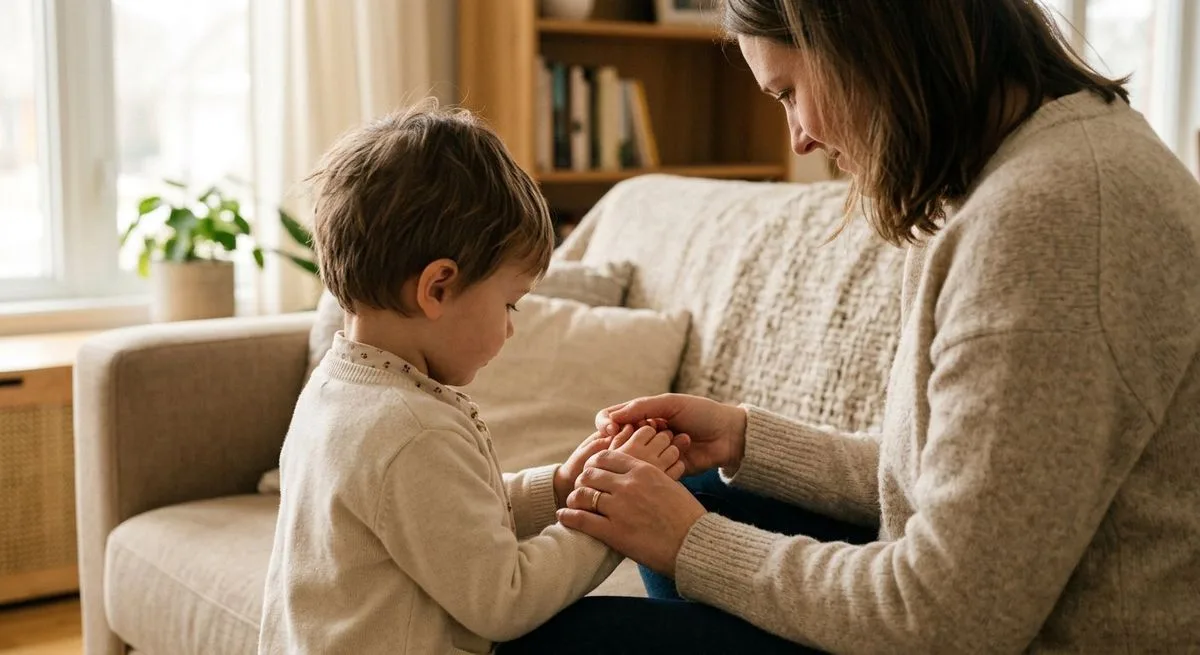
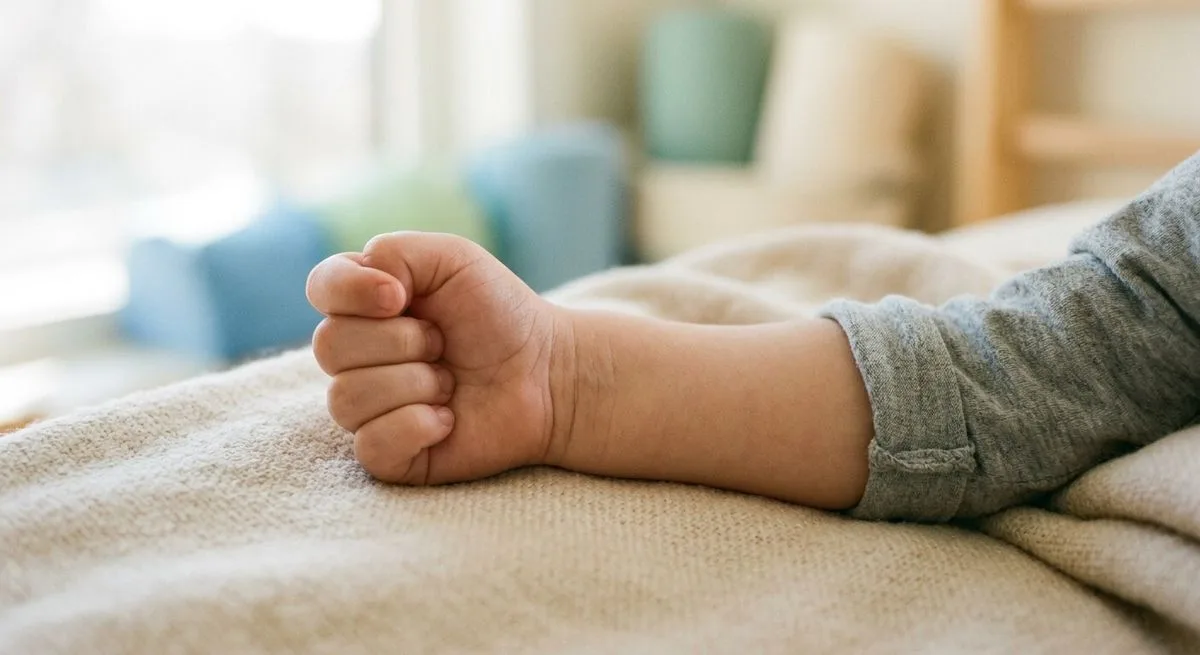
The shoulder is pulled in tight against the body. The elbow won't fully straighten. The little fist is clenched so hard the fingers leave marks on the palm. You try to gently open the hand — and the muscles push back like a stiff spring.
If you're the parent of a child with cerebral palsy (CP), this picture probably feels familiar. Spastic muscles pull the arm into the same position again and again — and the longer this goes on without intervention, the harder it becomes to change.
Stretching isn't a magic fix. But it's one of the most accessible ways to preserve what your child already has: range of motion, tissue elasticity, the ability to actually use the hand. This article walks through five specific techniques that can help.
What happens to muscles without stretching
A spastic muscle stays constantly tense. Over time it shortens, the surrounding soft tissue loses elasticity, and the joint freezes into one position. That's a contracture — and once it sets in, it's irreversible.
Stretching slows this process down. It doesn't remove spasticity, but it helps preserve mobility and keeps tissue from "locking up." Regular sessions produce concrete results:
- Maintain and increase joint range of motion
- Prevent fixed contractures from forming
- Improve the elasticity of muscles and soft tissue
- Reduce the risk of injury during movement
Types of stretching
Not all stretching is the same. Here are the four approaches used for spasticity:
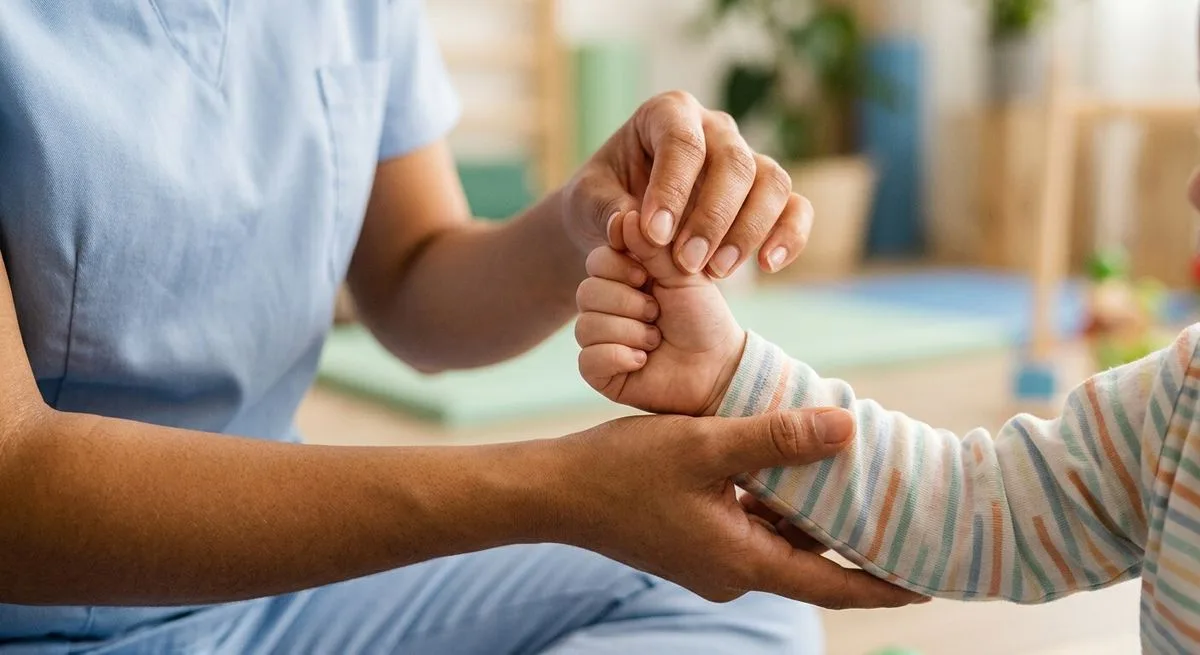
- Manual — a therapist stretches tense tissue by hand, controlling both force and direction. The most flexible and widely used method.
- Mechanical — specialized devices (splints, weights, pulley systems) apply sustained stretch over time. The force involved is usually greater than with manual work.
- Self-stretching — the child performs the exercises independently, using their own body weight. These are the exercises you'll be able to do at home.
- Active inhibition — the child learns to consciously relax the muscle before stretching it. This works for the muscular component of spasticity, but it won't help with fixed contractures.
Three variables: direction, force, time
Before we get to the exercises, there are three parameters that determine both the result and the safety of the stretch.
Direction. Always stretch in the direction opposite to the spasticity. Slowly move the limb until you feel resistance, stabilize the joint's proximal segment, and gently stretch the distal segment.
Force. Enough to put tension on the tissue — but never enough to cause pain. Never push through pain: it only increases spasticity. If the child tenses up or cries, you've gone too far.
Time. Hold the stretch for 10-15 seconds. If the child tolerates it well, you can go up to 30-60 seconds. Rest for about 30 seconds between sets.
Technique 1. Shoulder abduction
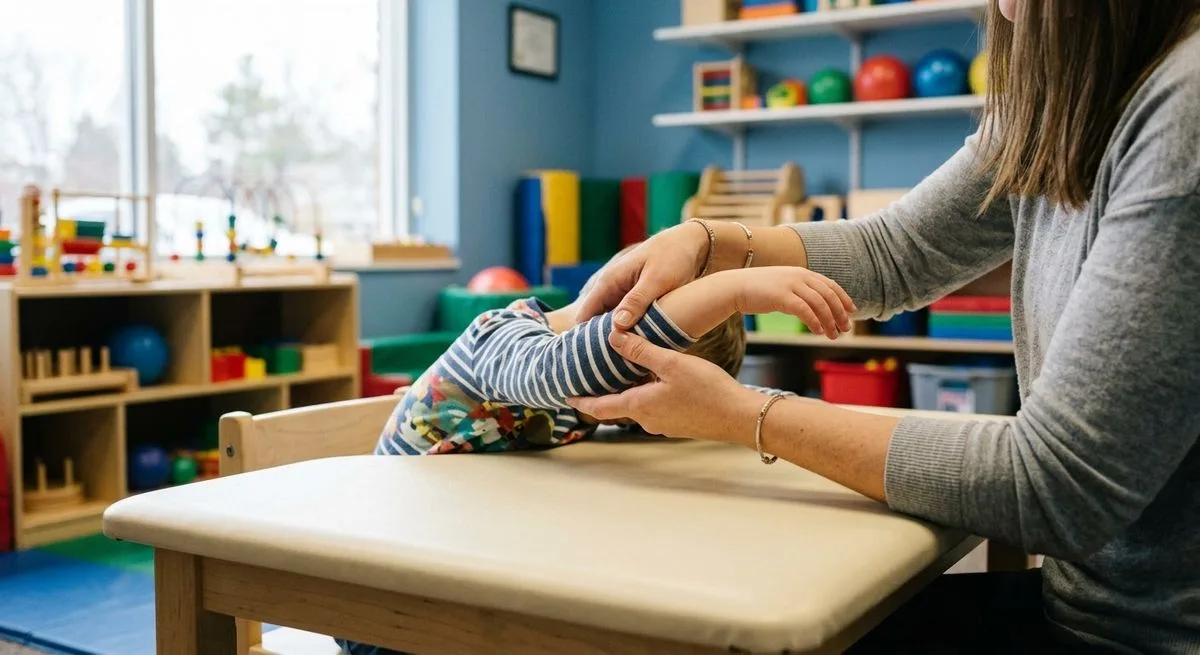
What's being stretched: the shoulder adductors — the muscles that pull the arm in against the body.
Manual stretch (therapist)
The child lies on their back, arm along the body, elbow bent at 90°, forearm in a neutral position.
The therapist stands facing the child, on the side of the arm being worked. The upper hand supports the distal end of the humerus; the lower hand rests in the armpit area. The lower hand passively abducts the shoulder to the maximum available range, stretching the adductors.
Self-stretch
The child stands sideways next to a table. The arm is straight at the elbow, palm resting on the table's edge. The child slowly squats down — body weight gently pulls the shoulder outward.
Technique 2. Elbow extension
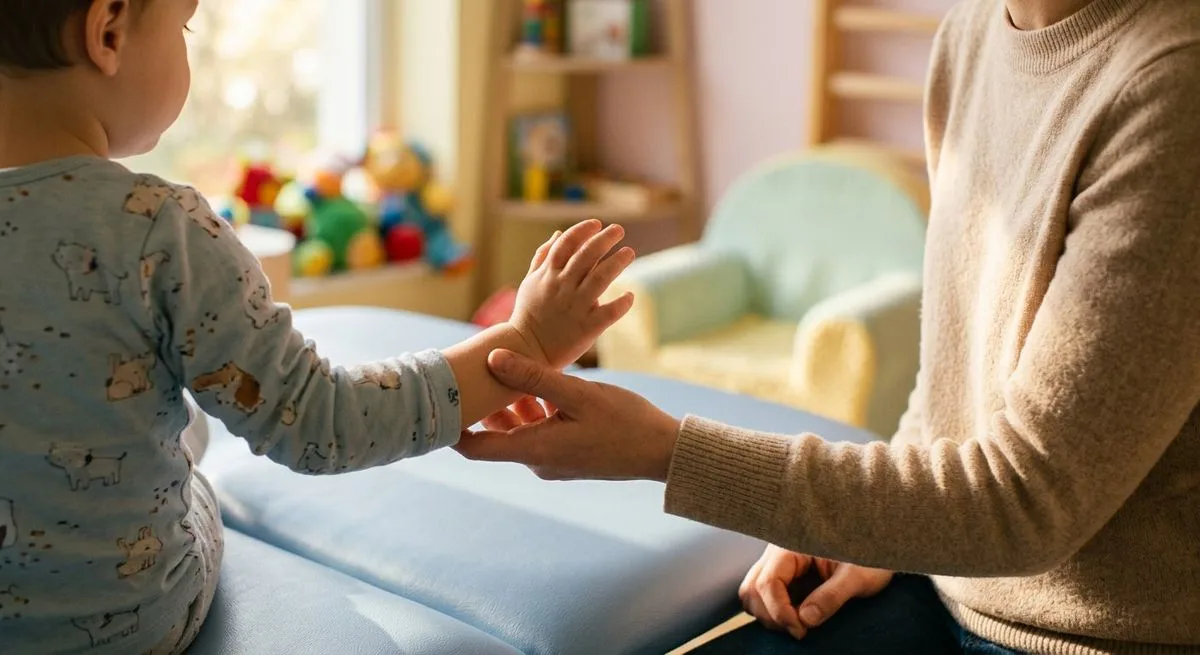
What's being stretched: the elbow flexors — the biceps, brachioradialis, and brachialis muscles.
Manual stretch (therapist)
The child lies on their back, arm slightly abducted and relaxed.
The therapist stands facing the child's head, on the side of the arm being worked. The inner hand stabilizes the proximal end of the humerus; the outer hand holds the distal forearm. The outer hand passively extends the elbow to the maximum range.
Forearm position determines which muscle takes the main load:
- Palm up (supination) — mainly the biceps
- Neutral position — the brachioradialis
- Palm down (pronation) — the brachialis
Self-stretch
The child stands facing wall bars, holds a rung with both hands, and leans their torso backward. Body weight stretches the elbow flexors. Vary the forearm position to work all three muscles.
For a more advanced version: while holding the rung, lift the feet off the floor — this intensifies the stretch.
Technique 3. Forearm supination
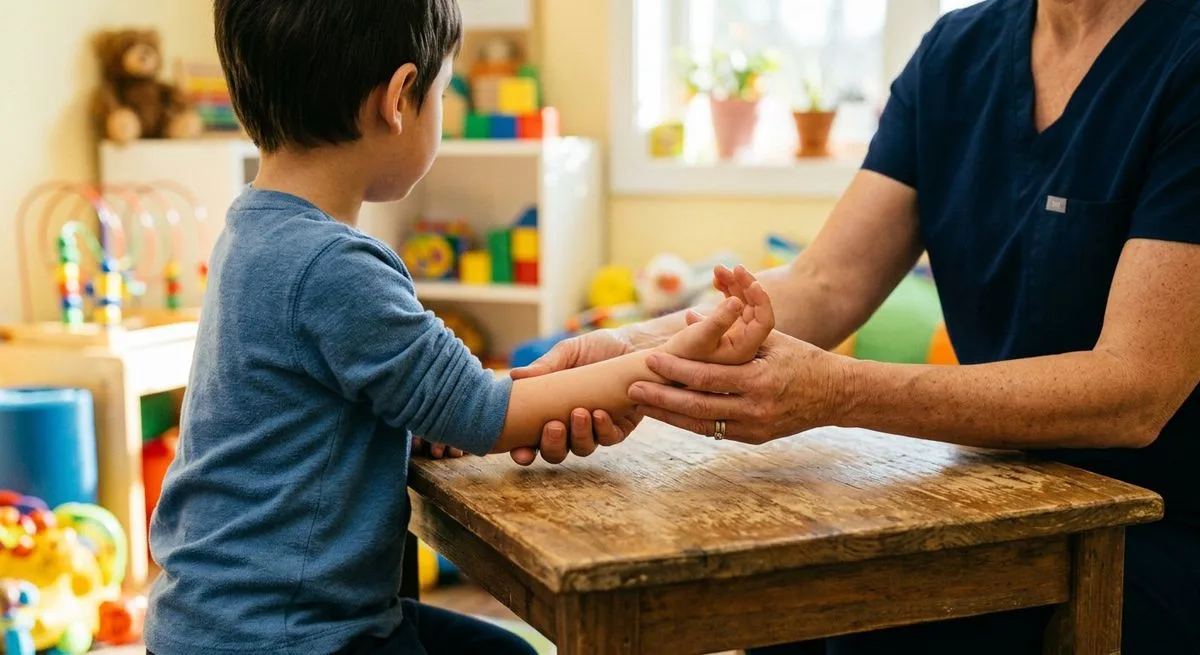
What's being stretched: the pronators — the muscles that turn the forearm palm-down.
Manual stretch (therapist)
The child lies down or sits. The upper arm rests on a table, elbow bent at 90°, arm relaxed.
The therapist stands on the side of the arm being worked. The upper hand grips the distal forearm from the palm side; the lower hand stabilizes the distal humerus. The upper hand turns the forearm palm-up (supination) to the maximum range. As this happens, the radius rotates around the ulna.
Self-stretch
The child bends the elbow of the working arm to 90°. With the other hand, they grip the forearm near the wrist and rotate it palm-up to the maximum available range.
Technique 4. Wrist extension
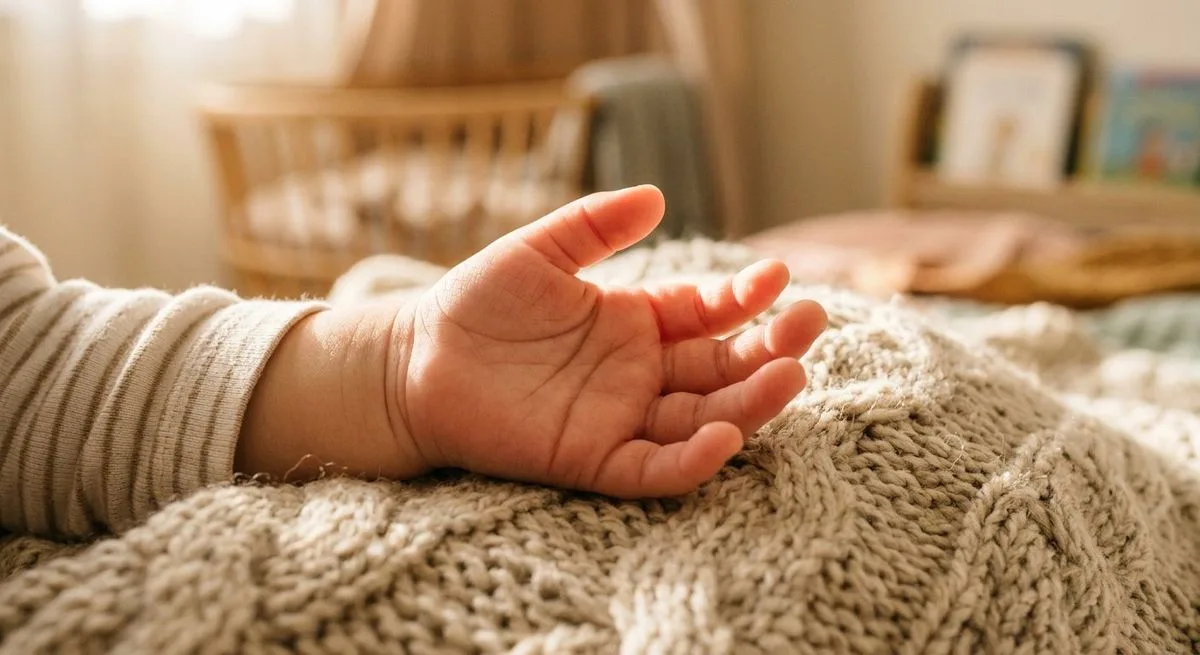
What's being stretched: the wrist flexors — the muscles that bend the hand downward.
Manual stretch (therapist)
The child lies down or sits. The forearm rests on a table, palm down or in a neutral position, the hand hanging off the edge, fingers relaxed.
The therapist sits on the side of the arm being worked. The upper hand stabilizes the distal forearm; the lower hand rests against the child's palm. The therapist extends the wrist (dorsiflexion), allowing the fingers to curl freely. The hand is passively brought to maximum extension.
Self-stretch
Option 1. The child presses their palms together in front of the chest, fingers pointing up, and lowers the wrists downward while keeping the palms together.
Option 2. The child places a palm flat on a table, holds it down with the other hand on top, and gently shifts the forearm to increase wrist extension.
Technique 5. Finger extension
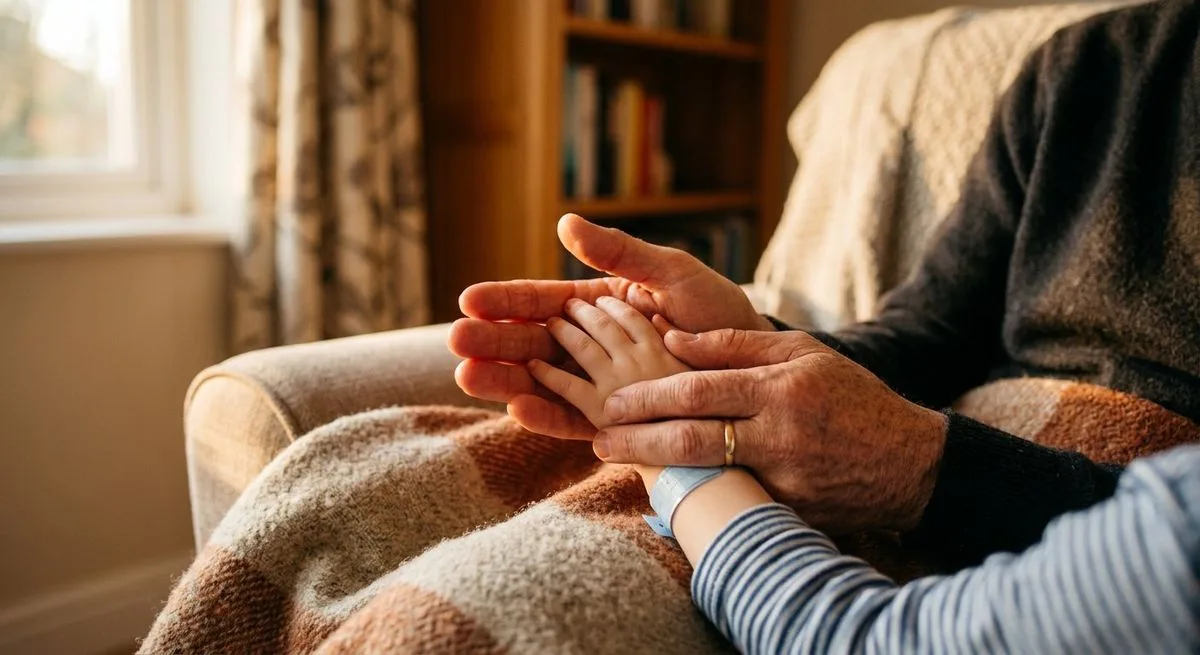
What's being stretched: the finger flexors — the muscles that close the hand into a fist.
Manual stretch (therapist)
The child lies down or sits. The arm is slightly abducted, elbow bent at 90°, fingers relaxed.
The therapist stands on the side of the arm being worked. The upper hand holds the distal forearm; the lower hand makes contact with the palm side of all five fingers. First, the lower hand passively extends the wrist to the maximum range, then fully straightens the fingers, stretching the flexors.
Self-stretch
The child brings the four fingers of the working hand together. With the thumb of the other hand, they press against the back of the hand at the metacarpophalangeal joints and gently extend the fingers.
Four things never to do
Stretching with spasticity calls for care. Four rules you should never break:
- Don't overstretch. Exceeding the safe range causes microtrauma and increases spasticity. If you feel resistance, stop.
- Don't stretch during swelling. Swelling is a sign of inflammation. Stretching is contraindicated while it's present.
- Don't stretch weakened muscles. If a muscle is already weak, additional stretching will make its condition worse.
- Don't compress the joint. Compressing a joint while simultaneously stretching it risks damaging the joint structures.
Want to make sure you're doing it right?
The descriptions in this article are a starting point, but every child is different. A specialist can show you the exact technique for your child's specific case, calibrate the intensity, and help you learn to feel the line between "enough" and "too much."
Book a consultation, and we'll help put together a stretching program that fits your child.