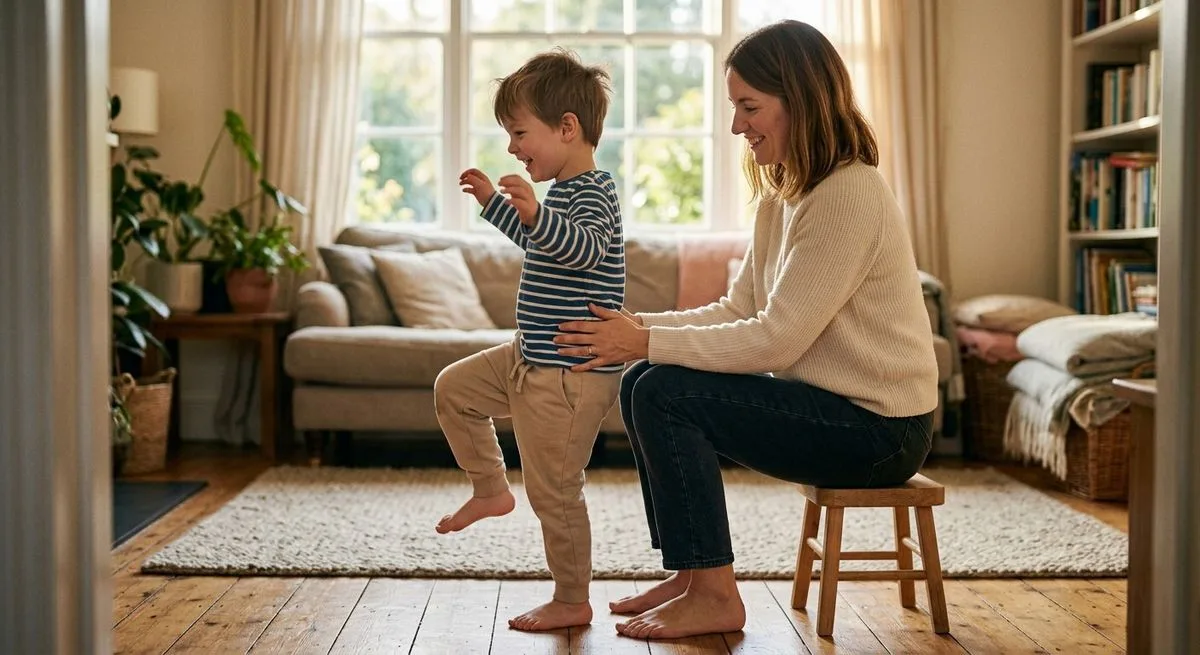
The feet are the foundation of the body
Picture a house whose foundation sits five centimeters lower on one side. The walls crack, the doors stop closing properly, the roof starts to sag. Something similar happens in a child's body when one leg becomes shorter than the other: leg length discrepancy in children sets off a chain of compensations — from the pelvis all the way up to the neck.
Why one leg becomes "shorter" in children
There can be several reasons. Sometimes it's the aftermath of an injury or an illness. But most often it comes down to uneven muscle work. In children with hemiparesis, one side of the body is weaker than the other, and this directly affects how the legs develop. That said, it isn't only about hemiparesis — any difference in muscle strength, or simply a habit of loading one side more than the other, can over time cause the legs to grow unevenly.
It's important here to distinguish between two types of shortening:
- True (structural) shortening — the bone itself is genuinely shorter (after a fracture, or due to a growth abnormality).
- Functional shortening — the bones are the same length, but the muscles, pelvis, and posture create a tilt, so the leg "behaves" as if it were shorter.
Functional shortening is far more common. And it's precisely this type that responds well to correction.
Back to the house metaphor: once the foundation sinks, the whole structure starts compensating. Leg shortening → pelvic tilt → spinal curvature (scoliosis) → compensatory torticollis. One problem drags the next one with it, like a row of falling dominoes.
The good news: it can be corrected
Functional shortening isn't set in stone. Orthopedic insoles help compensate for the difference right away, while targeted exercises strengthen the weaker side and teach the body to distribute load evenly.
Below are three exercises used by rehabilitation therapist Wang Haiyan in her work with children. All of them can be done at home, require no equipment, and fit naturally into everyday routines.
Exercise 1. Single-leg standing
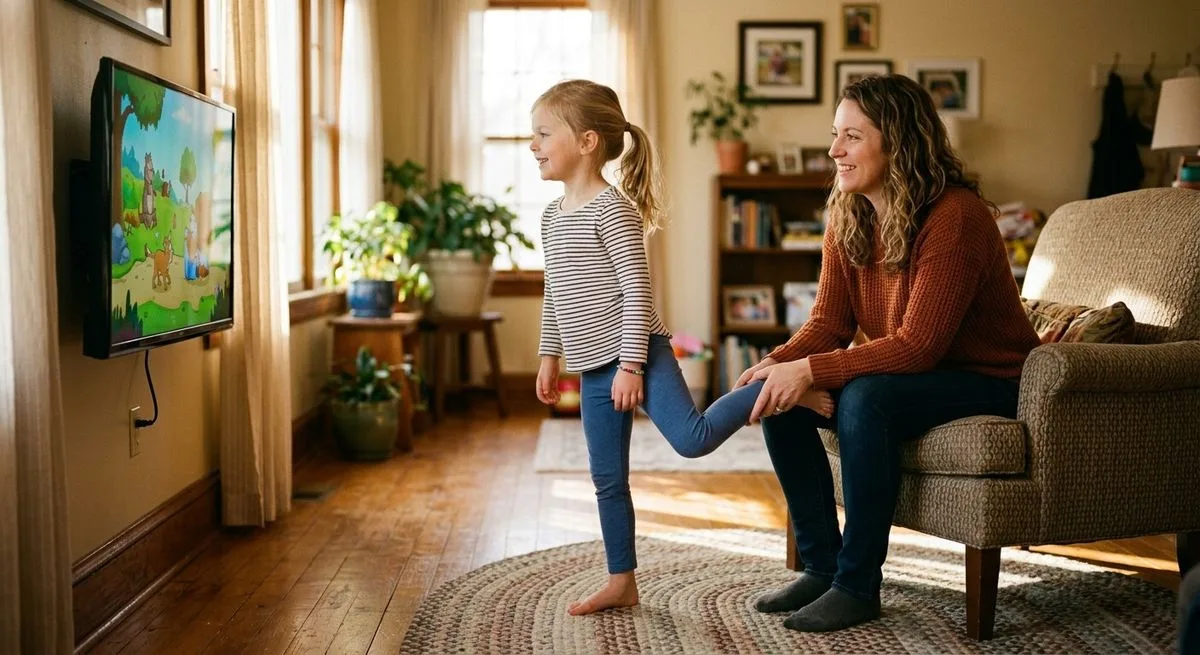
Goal: strengthen the muscles of the supporting leg and build the ability to hold balance.
How to do it:
- The child stands with the torso upright.
- The adult sits on a chair behind the child and bends one of the child's knees to a 90° angle, so the child is left standing on the other leg.
- Depending on how stable the child is, the adult supports them at the pelvis or the shoulder.
- Train the hemiparetic side more — that leg needs the extra load.
- Once the child holds balance confidently, you can add a weighted belt to increase the load.
Duration: 20–30 minutes. That's not a typo — single-leg standing needs to be sustained. Put on a cartoon, play a word game, let the child build with blocks at the table — let the exercise happen in the background of a familiar activity.
What to watch for:
- The knee of the supporting leg shouldn't bend excessively or hyperextend
- The torso shouldn't lean to one side — the body stays upright
- If the child gets tired and starts compensating, take a break
Why it matters in daily life. Single-leg standing isn't an abstract drill. Children use this skill every day — putting on pants, putting on shoes, stepping over a threshold, climbing into the bathtub, kicking a ball. By training balance on one leg, you're not just "building muscle" — you're giving the child more independence.
Exercise 2. Crawling in a circle
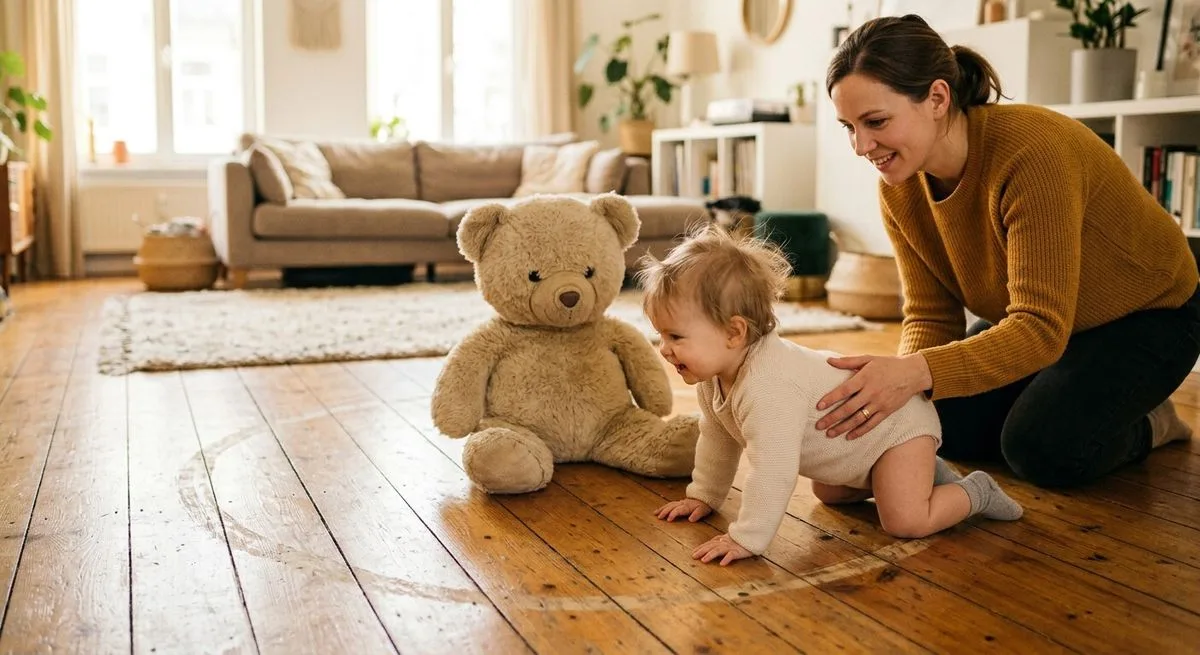
Goal: correct spinal curvature (scoliosis) and strengthen the trunk muscles.
How to do it:
- The child gets down on all fours.
- The adult positions themselves behind the child and helps gently bend the torso toward the side of the scoliosis.
- The child crawls in a circle around a stationary landmark — a chair, a large toy, or a laundry basket all work well.
- Once the child gets the hang of it, let them crawl on their own. The adult's job is to watch posture and prevent compensatory movements (shoulders tilting, leaning to one side).
Crawling in a circle acts as a gentle "correction": moving along a curve forces the muscles on one side of the trunk to work harder, gradually evening out the muscle imbalance.
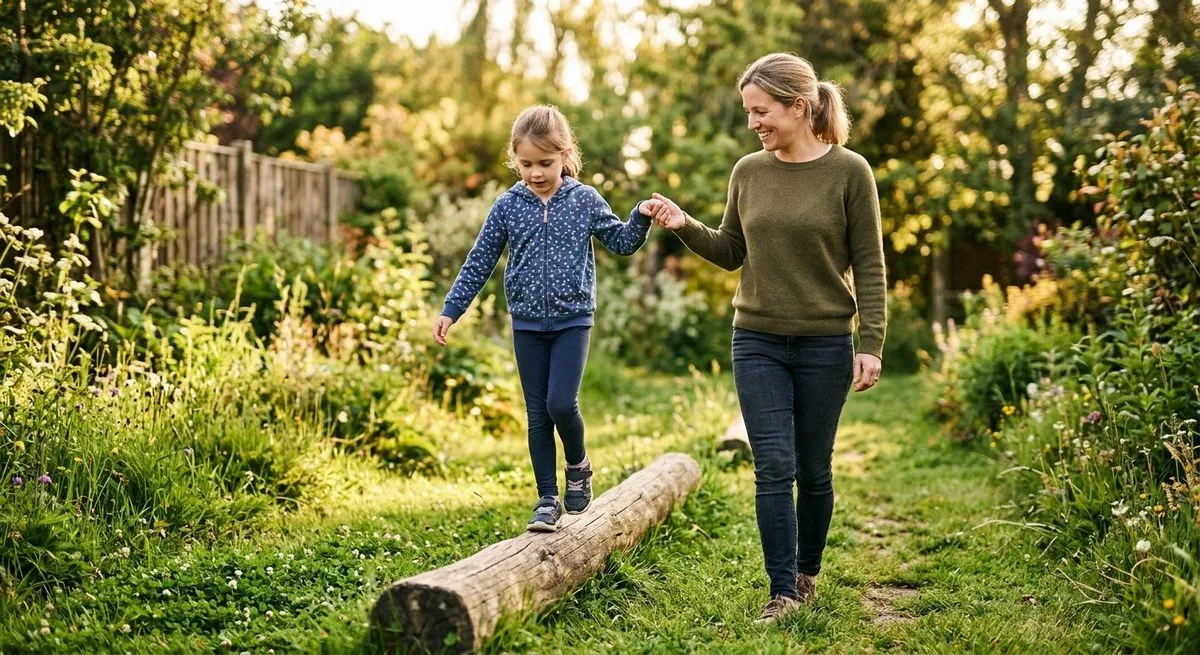
Exercise 3. Walking in a circle
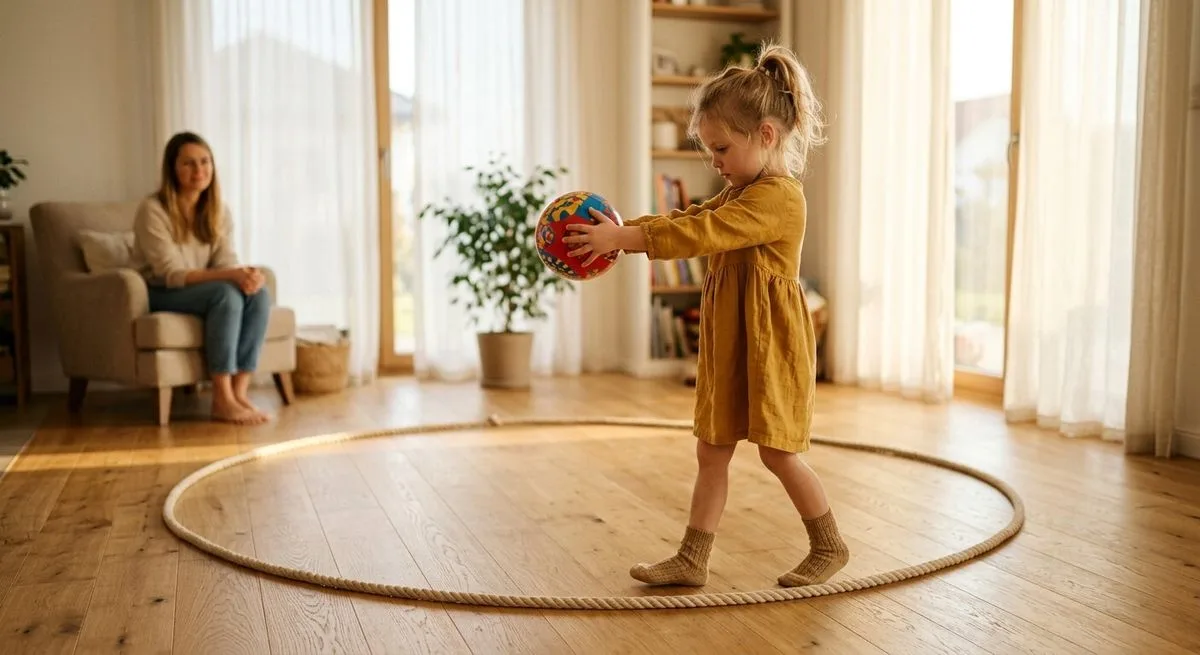
Goal: encourage weight transfer onto the weaker side and reduce asymmetry while walking.
How to do it:
- Draw a large circle on the floor (or lay one out with a rope).
- The child walks along the circle. The leg that needs more training — the weaker one, or the one with a shortened stance phase during walking — stays closer to the center of the circle.
- Keep the pace slow. The child needs to actually feel the weight shifting onto the inner leg with each step.
- For extra control, you can have the child extend their arms forward or carry a ball with both hands.
What to watch for:
- Steps should be even, without dragging or tilting
- The pace really does need to be slow — rushing cancels out the effect
- If incorrect walking postures show up, stop and correct them
Who it's for: children who walk independently and have scoliosis, a shifted center of gravity to one side, or hemiparesis.
Not just exercises — skills for life
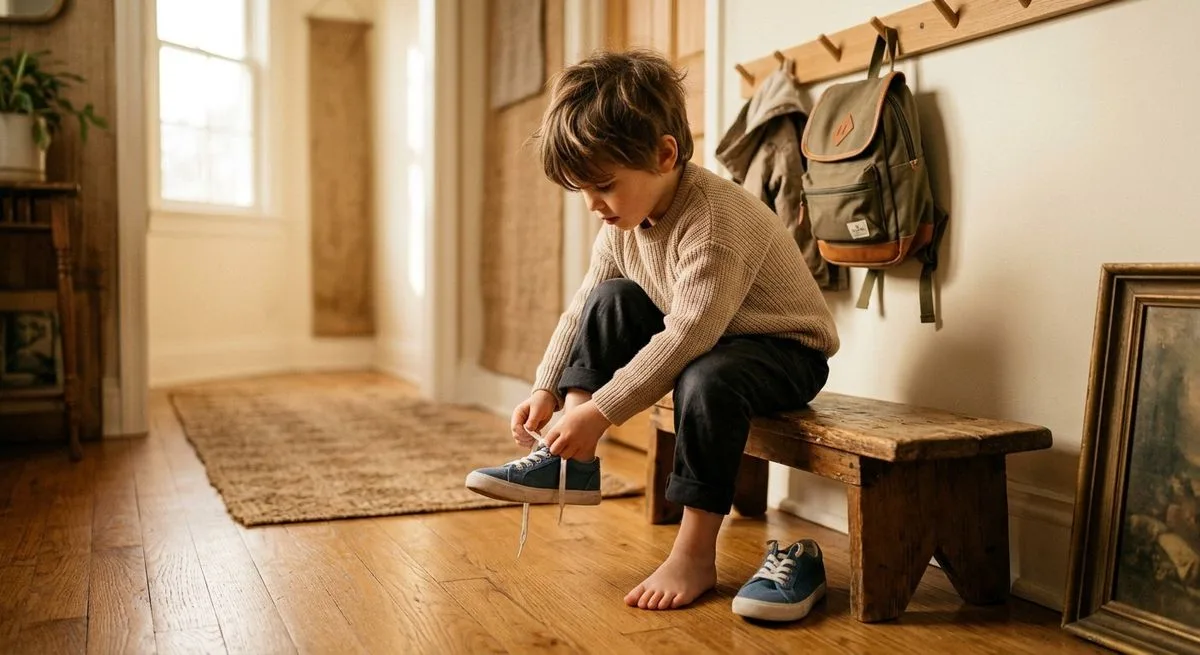
All three exercises share one thing in common: they don't stay on the mat. Single-leg standing is really about being able to get dressed. Crawling in a circle is about body control. Walking in a circle is about a steady gait on a walk outside.
You can't fix a house's foundation in a single day. But every session adds one more layer that makes the base a little more level, and the whole structure a little more stable.
Leg length discrepancy isn't a life sentence. It's a problem that gets solved through daily work. Start with one exercise, build it into your child's routine — and the foundation will start to level out.
If you'd like a specialist to assess your child's specific situation, put together an individual program, and demonstrate the correct technique, reach out to NeuroLife for a consultation.