Remember learning to ride a bike? At first the handlebars wobble, the pedals won't cooperate, and the ground feels much too close. Then, suddenly, you're riding. The body remembered. Balance and coordination training in children works exactly the same way. Every wobble isn't a failure — it's recalibration. The brain and body are learning to work together, and with each attempt the movement gets a little more precise, a little more confident.
If your child sways while standing, drops things, or trips on flat ground, that's not clumsiness or laziness. Often there's an underlying coordination difficulty behind it. And it's something you can work on — patiently, through play, every day.
Balance and Coordination: Why a Child "Can't Hold Steady"
Standing upright, walking confidently, and not missing when reaching for a cup all depend on a whole team working together: the vestibular system, the cerebellum, the spinal cord, and the deep sensory system (proprioception). When even one link in that chain isn't working as it should, the result is ataxia — movements become clumsy and poorly coordinated, and holding a posture or walking in a straight line becomes a real task.
Balance is the ability to hold a posture and automatically adjust to changes. It comes in two forms:
- Static balance — holding the body still: sitting upright, standing in place.
- Dynamic balance — staying steady while moving. This includes automatic balance (standing up from a chair without falling) and reactive balance (getting a push and staying on your feet).
Coordination means movements are smooth, accurate, and applied with the right amount of force. Hands reach exactly where they need to. Steps land at the right length. A ball flies toward the target instead of off to the side. The same structures are responsible for coordination — the cerebellum, the vestibular system, and the proprioceptive system — and they need to work together like a well-tuned orchestra.
When someone in that "orchestra" is out of tune, things get harder for the child. But — and this is the important part — the brain is plastic. Regular practice builds new neural pathways. Just like with the bike: shaky at first, then steadier and steadier.
5 Exercises for Balance and Coordination Training at Home
The most important thing: for a child, this needs to feel like play, not "training." No serious faces, no stopwatches. Just enthusiasm, praise, and the joy of moving.
1. The Bridge
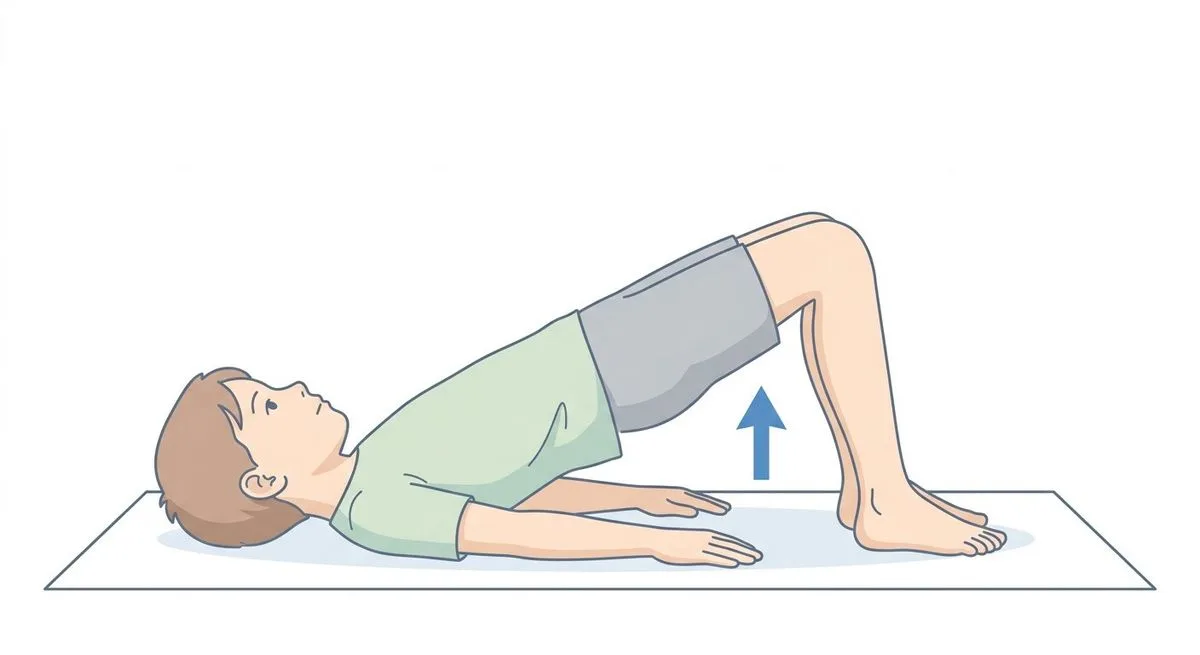
The child lies on their back, knees bent, feet flat on the mat. The task is to lift the hips up and hold the position. This strengthens the trunk muscles — the very muscles responsible for whole-body stability. Without a strong "core," neither balance nor coordination can really work.
Turn it into a game: "Build a bridge so the toy car can drive underneath you!"
2. Standing Up from a Chair: A Toy Game
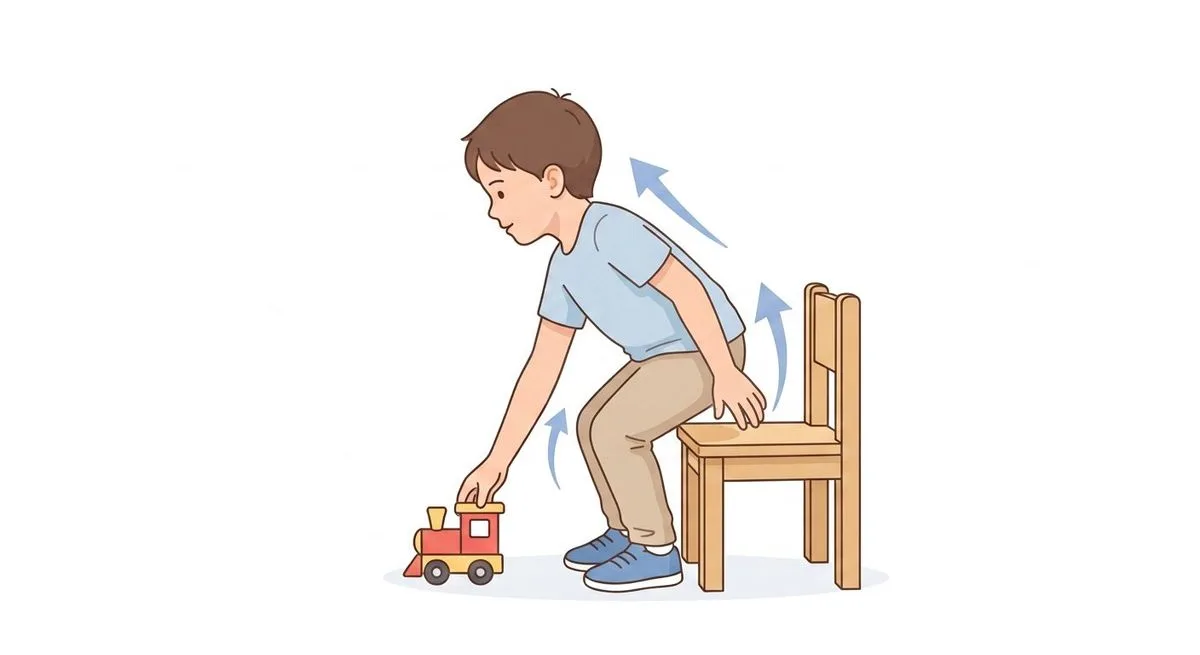
Scatter toys around the chair on the floor. The child sits, stands up, picks up a toy, and sits back down. Up — down, up — down. This isn't just a squat. It's a transition between positions — training automatic dynamic balance. Meanwhile, the child just thinks they're collecting toys.
3. Standing Stability on Different Surfaces
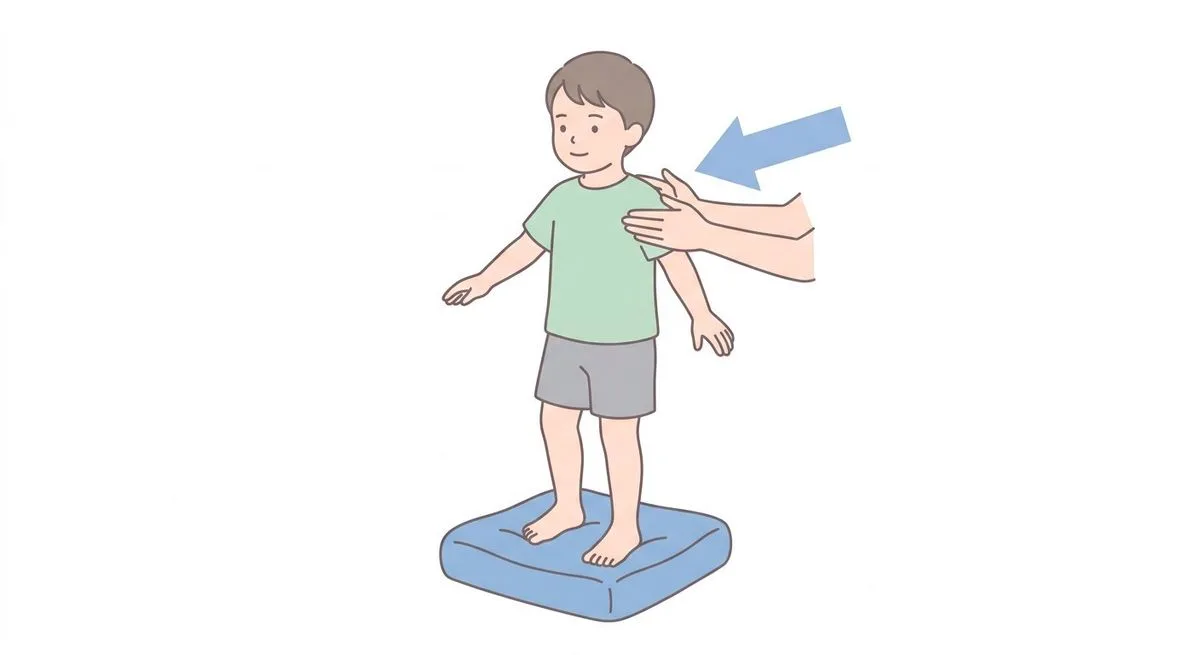
Have your child stand on different surfaces: a hard floor, a carpet, a soft mat, a pillow. Each new texture is a new challenge for the vestibular system and proprioception.
Once your child stands confidently, try gently nudging them forward, backward, or to the side — not to make them fall, but to help them learn to correct their center of gravity. This trains reactive dynamic balance.
4. Throwing and Catching a Ball
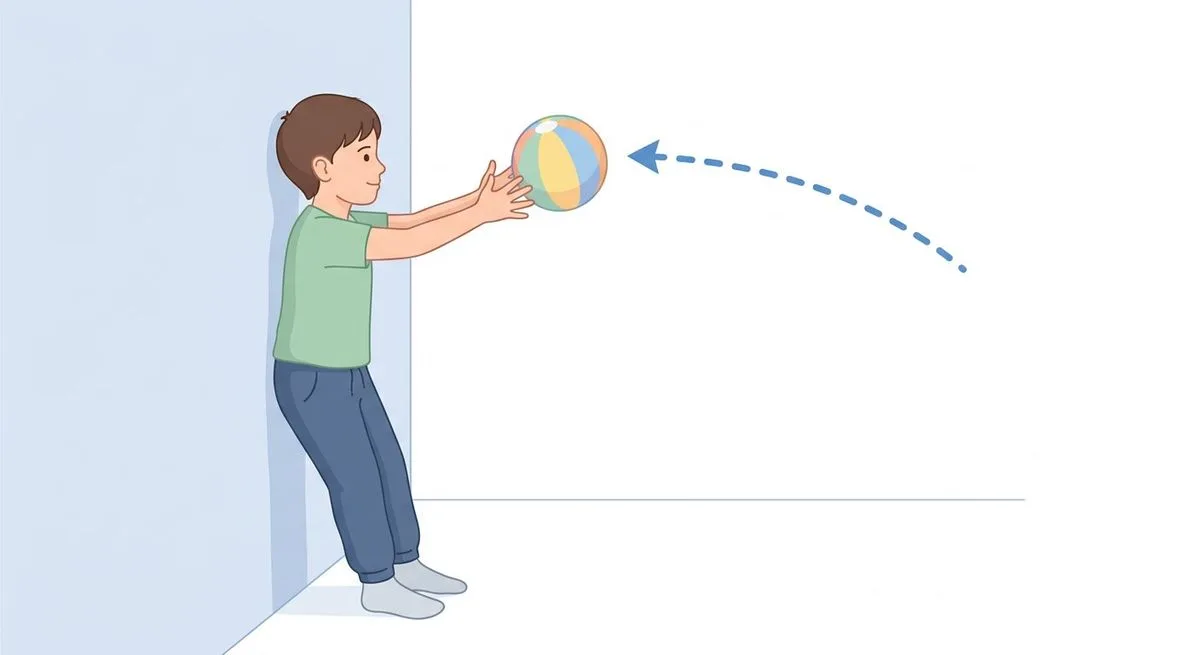
The child stands (if they can't yet stand unsupported, let them lean their back against a wall). Start simple: roll a ball along the floor and have them catch it with both hands. Then move to tossing a soft ball from a short distance. Then aim at a target.
Everything works together here: standing balance, hand-eye coordination, and a sense of direction and force. For the child, it's simply a fun game with mom or dad.
5. The Copycat Game
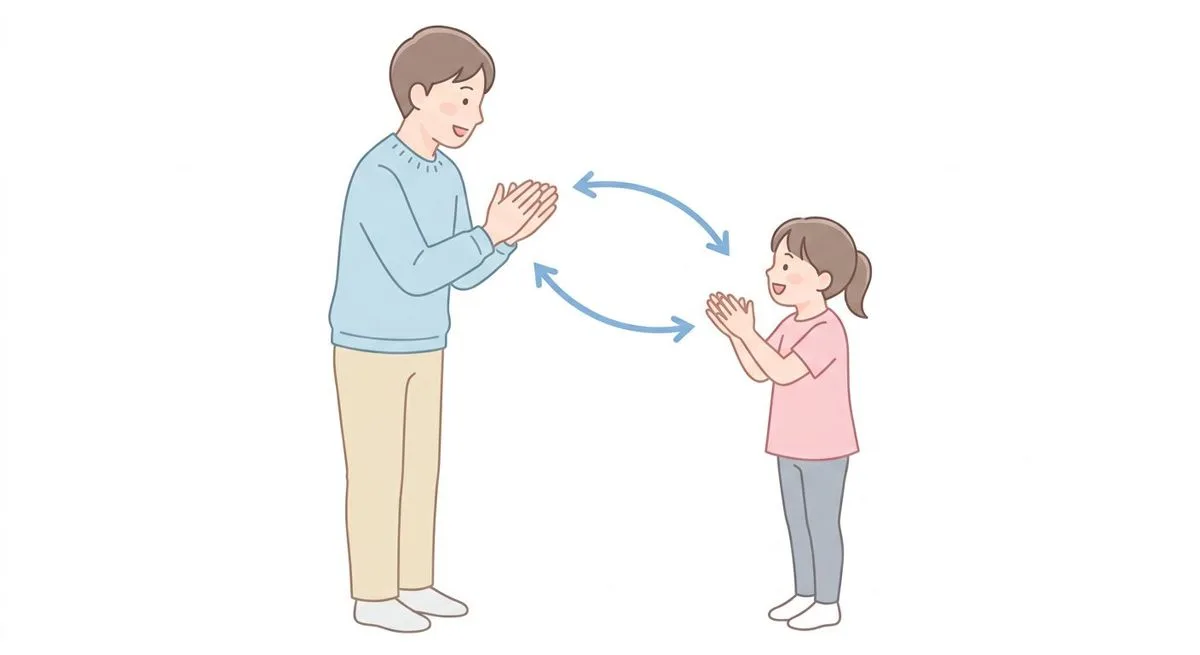
Stand facing your child and demonstrate movements: clap your hands, stomp a foot, pat your knees, raise your arms overhead. The child copies you. Gradually speed up the pace or add sequences: clap — stomp — pat your knees.
This trains motor planning, rhythm, and coordination all at once. And it's funny, too — laughter here isn't a distraction, it's part of the therapy.
The Difficulty Ladder: How to Progress the Right Way
Progressing balance training isn't about "more and harder." It's a clear system. Picture a ladder with five rungs:
- Base of support: from wider to narrower. Start with a wide stance (feet shoulder-width apart). Then feet together. Then standing on one leg. The smaller the base of support, the more work for the balance system.
- Center of gravity: from low to high. Begin with exercises lying down and sitting. Then move to hands and knees, then kneeling. Only then move to standing. The higher the center of gravity, the harder it is to hold balance.
- From static to dynamic. First, hold a posture still. Then move within that posture. Then change position entirely: standing up from sitting, sitting down from standing.
- Gradually add complexity. Layer in extra elements: holding a ball, turning the head, answering questions during the exercise. The brain learns to balance not just the body, but attention too.
- From eyes open to eyes closed. Vision is a powerful cue for balance. When we "turn it off," the vestibular system and proprioception are forced to work at full capacity. Closed eyes are like taking the training wheels off a bike.
Every Attempt Is a Foundation
A child's rehabilitation is a lot like learning to ride a bike. It's shaky at first. There will be falls. Sometimes progress seems to stall. But every attempt is a recalibration, a new neural connection, one more step toward confidence.
Your patience and consistent practice now are the foundation your child will build their stability on — in every sense of the word.
If you'd like to put together a training program for your child, reach out to a rehabilitation specialist who can assess their level and design an individual plan. In the meantime, play, keep moving, and believe in every attempt.