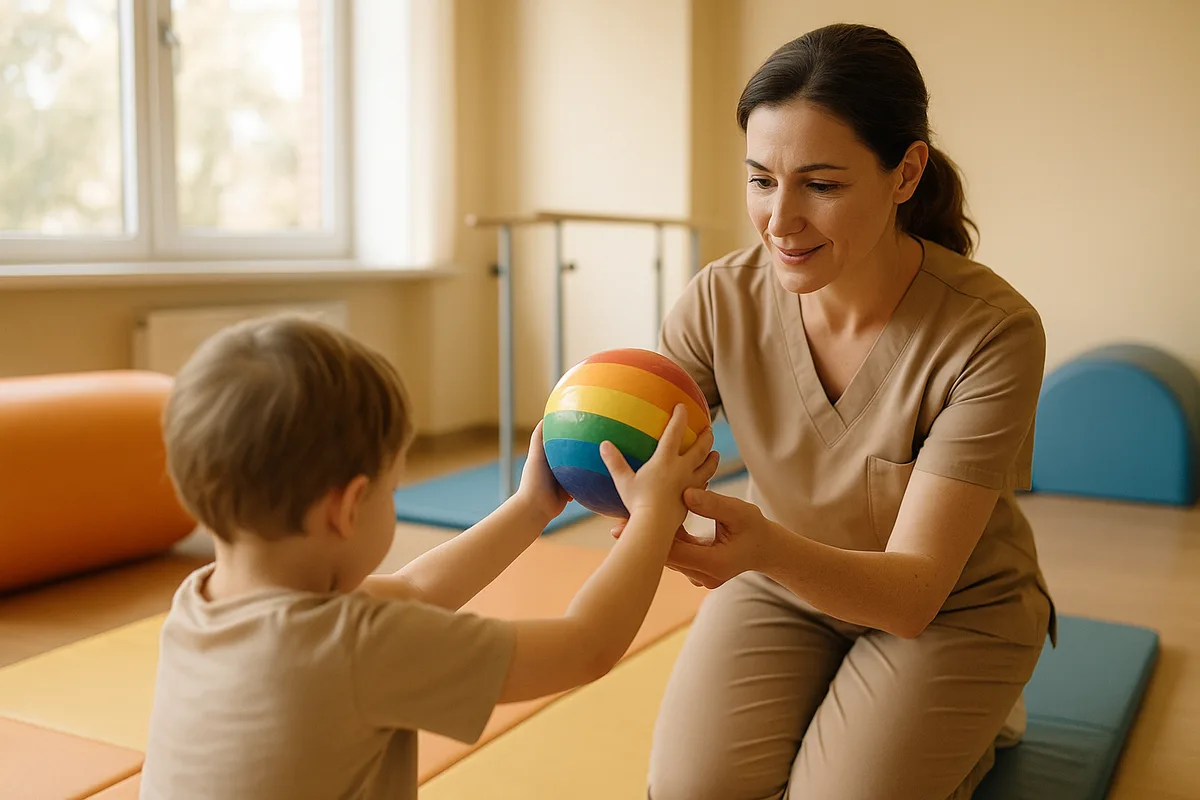
Motor dysfunctions such as delayed motor development and cerebral palsy (CP) call for a comprehensive approach to rehabilitation. This article looks at specific training methods that help children with these conditions build motor skills and improve their quality of life.
Head and Neck Training
Correct head and neck positioning is the foundation for further motor development. Depending on the type of impairment, different techniques are used:
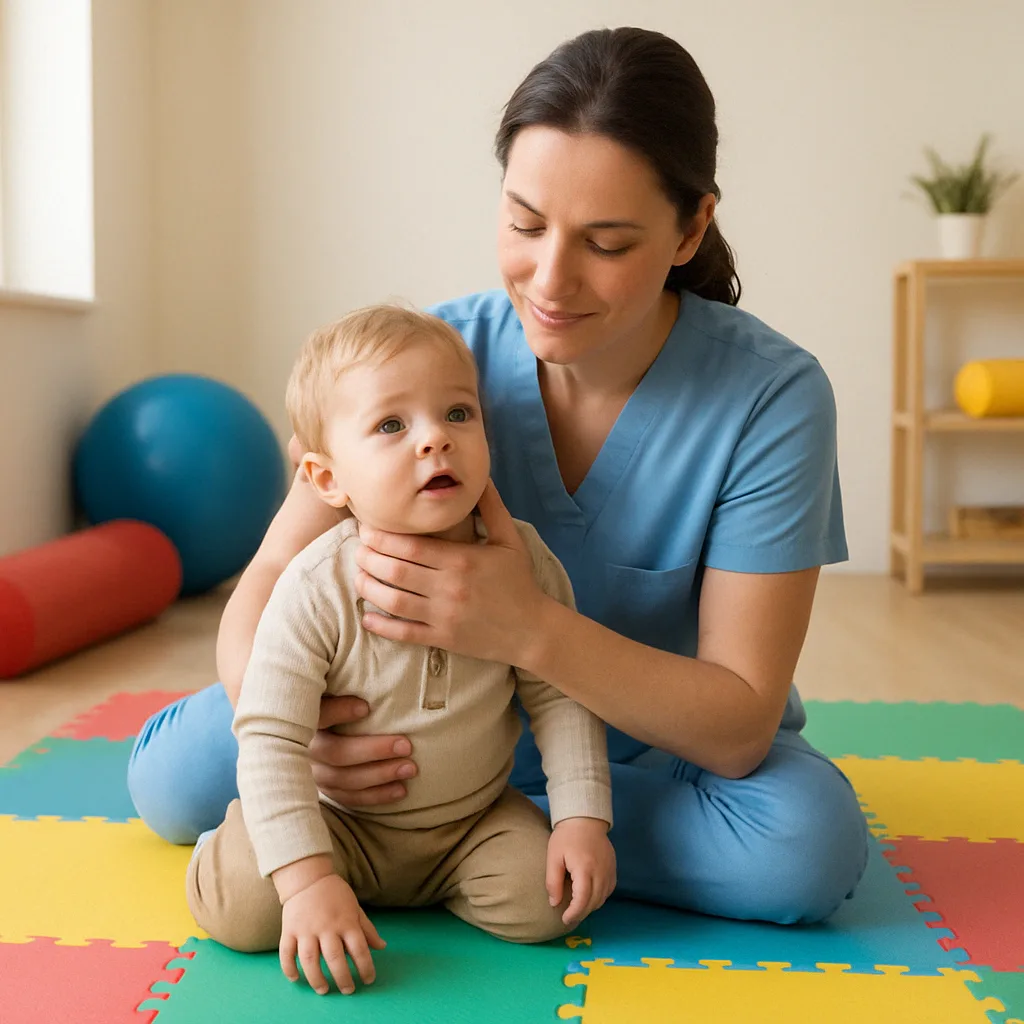
- When the head tilts back: support the child's head on both sides and gently lift the neck upward while pressing down on the shoulders to correct the position.
- For spastic cerebral palsy with predominant flexion: hold the child by the elbows, raise the arms upward with outward rotation, then pull them forward. This helps reduce head flexion, internal shoulder rotation, and elbow and wrist flexion, and improves hip extension.
- For low muscle tone: if the child cannot hold their head centered, hold them by the shoulders, press your thumbs on the chest, and gently pull the shoulders forward. This helps raise the head and keep it in a midline position.
Limb Training
Upper Limbs
Children with cerebral palsy often show characteristic abnormalities in arm positioning:
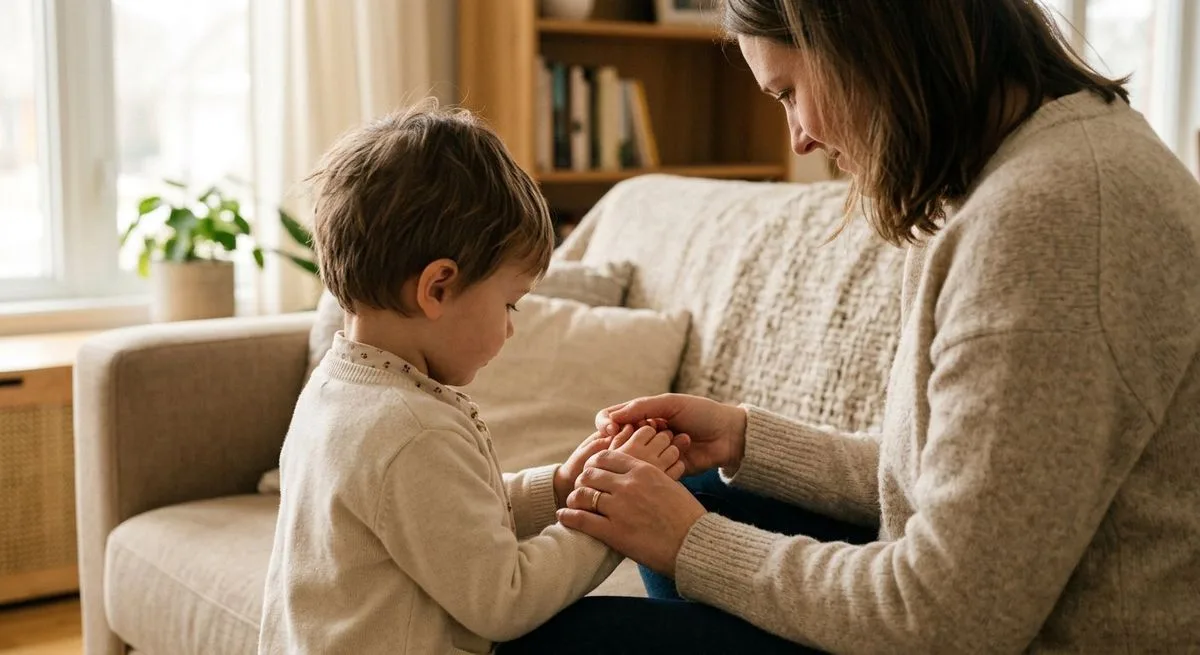
- If the head is tilted to one side, the shoulders are rotated inward, the elbows and wrists are flexed, and the thumb is tucked inside a clenched fist: with one hand, hold the child's elbow from the outside, lift and rotate the arm outward, and with the other hand straighten the wrist and open the fist.
- If the wrist is flexed and the fist is clenched, do not use force. Instead, hold the child's elbow, straighten and rotate the arm outward, while gently pulling the fingers away from the thumb to straighten the wrist and fingers.
Lower Limbs
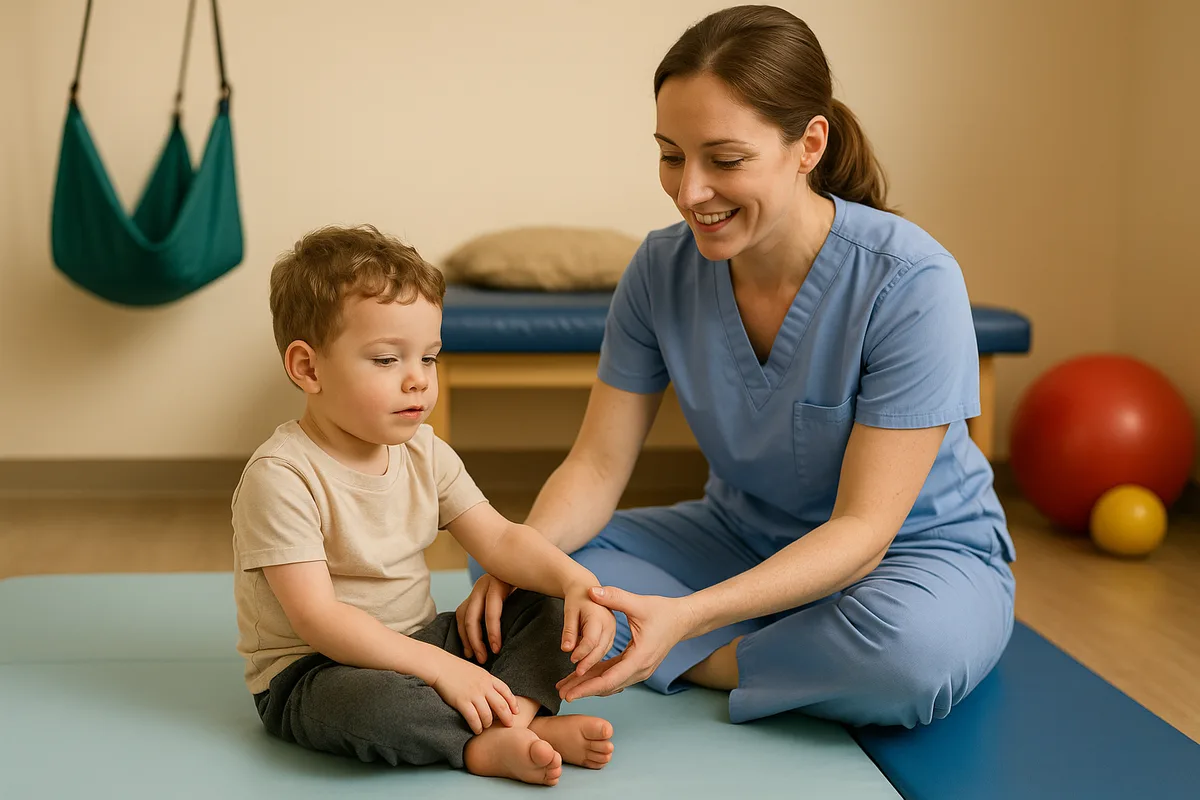
- For internal hip rotation and adduction, knee extension, and plantar flexion of the ankles: hold the child above the knees and rotate the hips outward to spread the legs apart.
- If the legs are drawn together or crossed, making it difficult to put on shoes: flex the hip joints and spread the legs apart so that the feet bend.
Supine Positioning Training and Trunk Alignment
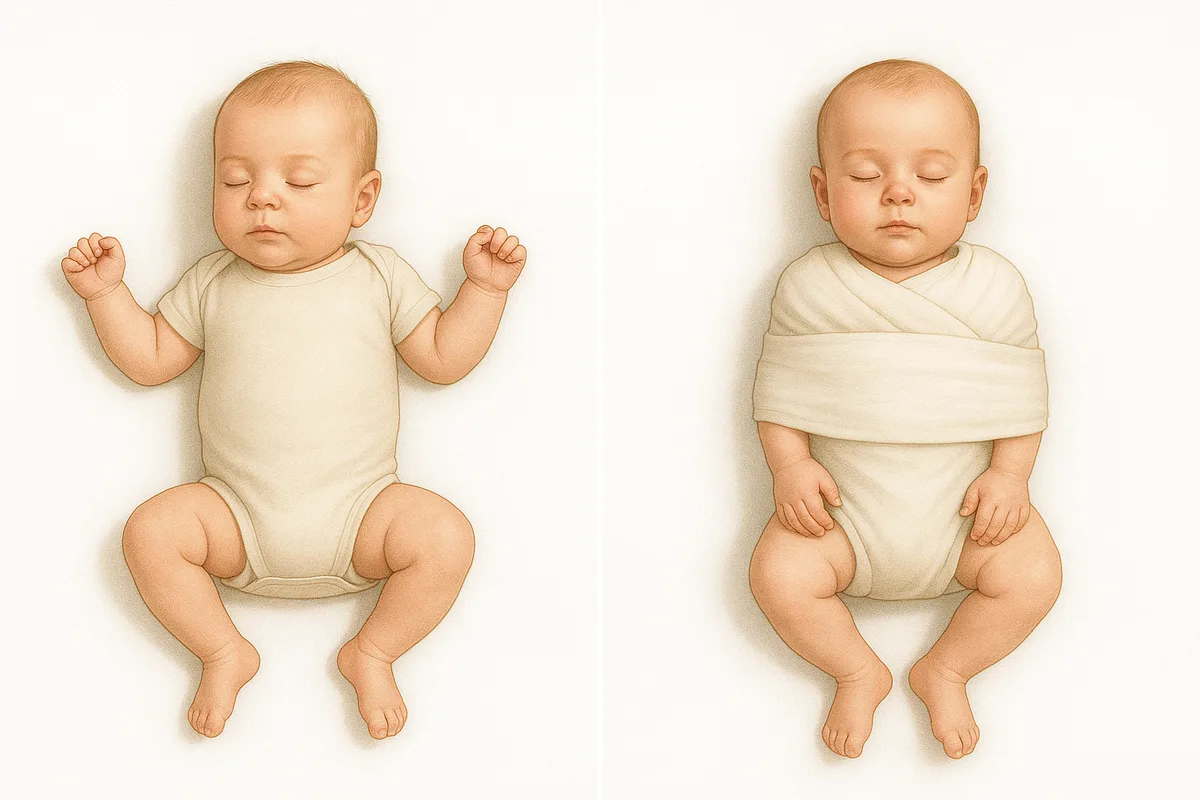
- If a child with cerebral palsy spends long periods lying on their back, the extensor muscles can become hypertrophied. In this case, a hammock can be used during the day, and at night a mattress with sandbags arranged to mimic a hammock shape.
- Children with extremely low muscle tone may show a "frog position" when lying on their back. Use a blanket or scarf to gently pull the shoulders forward and secure them across the chest, leaving the elbows free and keeping the legs together to make movement easier.
Good trunk rotation shows up in children with various forms of cerebral palsy as the ability to roll over correctly. To train this skill, use the following methods:
- Hold the child by the ankles and perform crossing leg movements so the hips and pelvis move together with the trunk.
- Raise the child's arms above the head, hold them by the elbows or one shoulder, and perform rotational movements of the trunk.
Sitting Position Training
Different methods are used depending on the type of motor dysfunction:
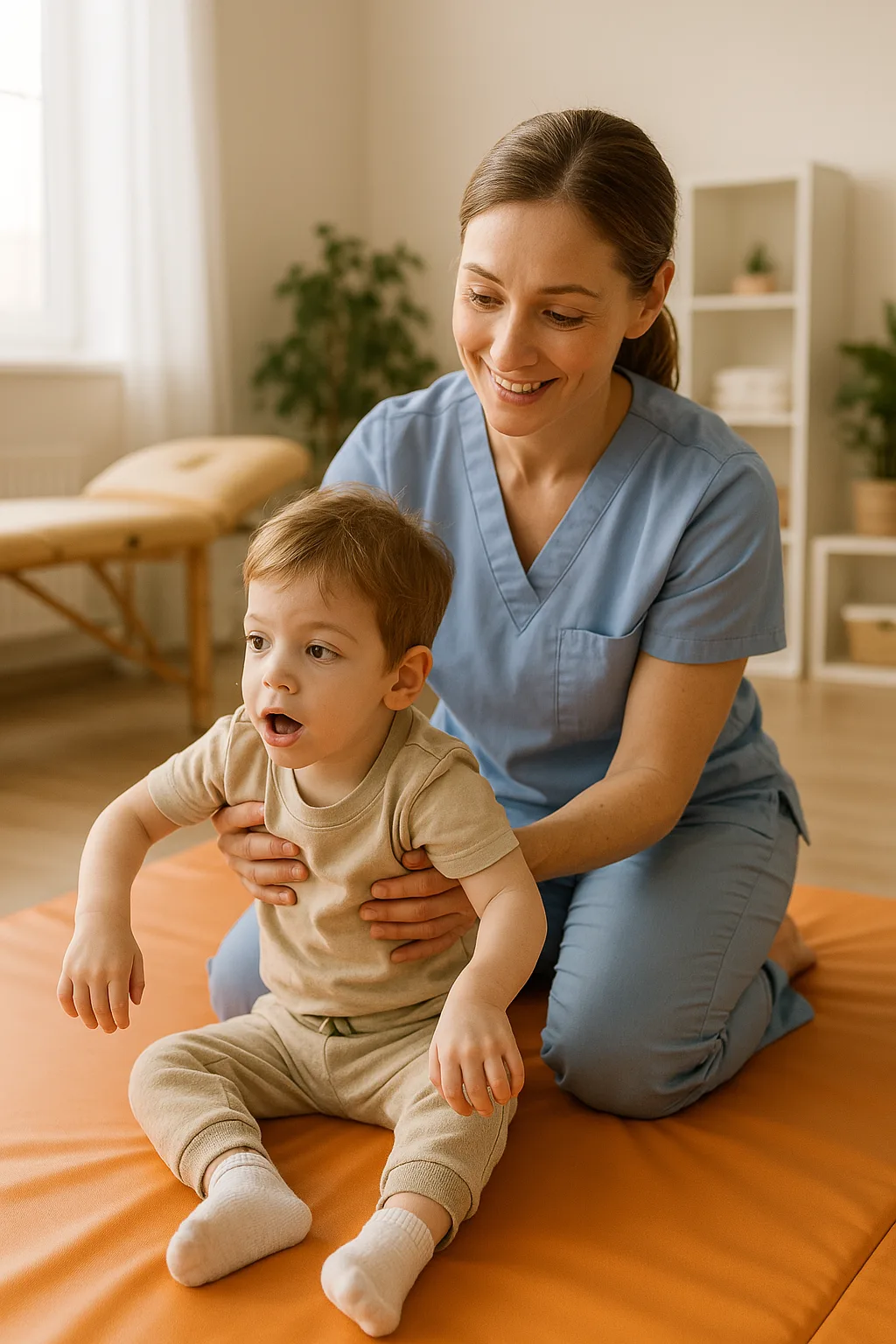
- For children with spastic cerebral palsy: to sit the child up, the hip joints need to be flexed. Place your hands under the armpits, stabilize the shoulders, then rotate the hips outward, spread the legs, and press down gently so the child can lean forward and sit up independently.
- For children with the hyperkinetic form of cerebral palsy: rotate the arms inward and extend them forward, or give the child a stick to hold, and bring the legs together with the hips flexed to achieve balance while sitting.
- For children with low muscle tone: sit the child on a chair or on the mother's lap, place your hands on the lower back, use your thumbs to stabilize the spine on both sides, and press down gently to help straighten the head and back.
Standing and Walking Skills Training
The following methods are used to develop standing and walking skills:
- For rigid, adducted legs, in addition to regular stretching of spastic muscles, physical therapy can be applied.
- For spastic knee flexion, besides stretching the hamstring muscles, use a standing frame (vertical stander) or orthopedic splints.
- For clubfoot and foot drop, in addition to manual stretching, a wedge-shaped support or orthopedic footwear can be used.
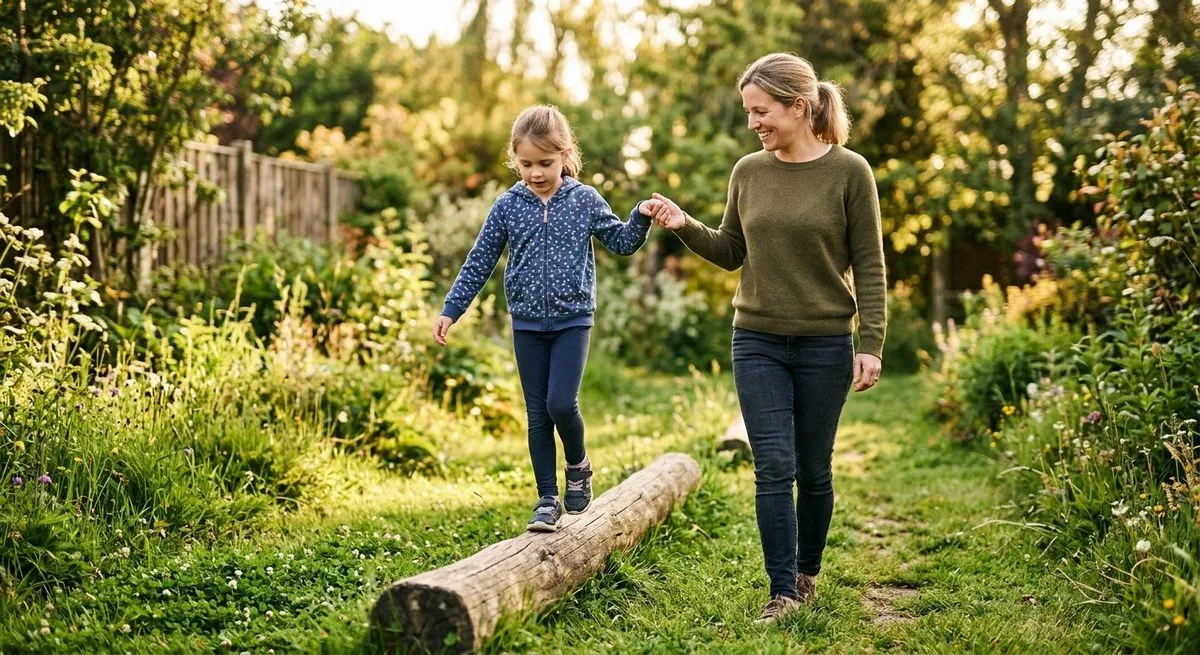
- In children with spastic cerebral palsy, weight while standing shifts onto the toes and the inner edge of the foot, which interferes with stepping. Stabilizing the elbows, straightening and rotating the arms outward, and then gently pushing the shoulders forward and up helps spread and straighten the legs, and straighten the head and torso, making walking easier.
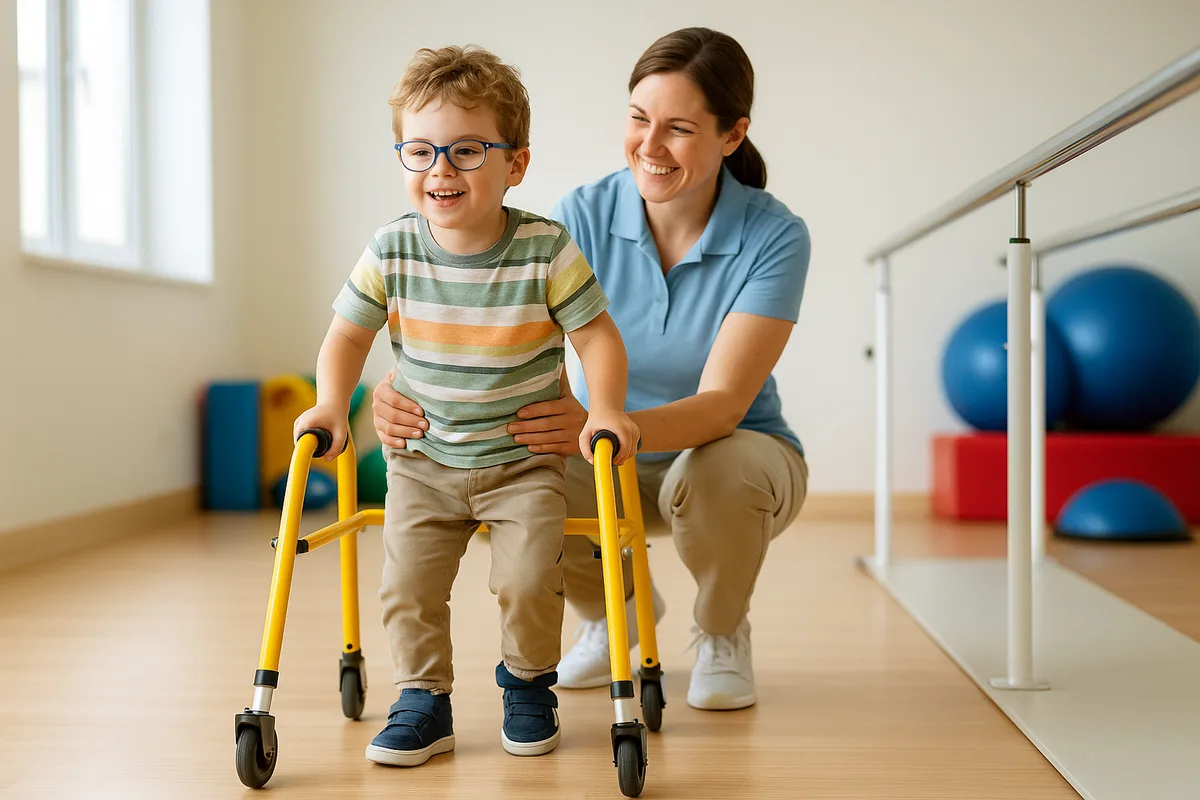
- During gait training, it's important to continuously correct abnormal gait patterns and muscle imbalance. Start with support (the edge of a bed, handrails, a walker, a stroller) and gradually progress to crutches.
Conclusion
Rehabilitating children with motor dysfunctions is a complex, long-term process that requires an individualized approach and professional expertise. The training methods presented here are part of a broader treatment strategy and should be carried out under specialist supervision.
If your child has been diagnosed with delayed motor development or cerebral palsy, don't put off seeing a specialist. Starting rehabilitation early significantly improves its effectiveness and supports better motor development.