Scientific Evidence for Stem Cell Effectiveness in Cerebral Palsy
Cerebral palsy (CP) is a group of neurological disorders that affect movement and posture development. Modern medicine is actively researching the use of stem cells as an innovative treatment approach for this condition. Clinical studies conducted around the world are providing scientific evidence for the effectiveness of this approach.
Key Clinical Studies in Global Practice

Breakthrough Research in South Korea
A team of researchers led by Dr. Min Yong Kim of the CHA Bundang Medical Center conducted a large-scale clinical study involving 88 children with various forms of cerebral palsy. The study's distinguishing feature was its combined use of:
- Donor umbilical cord blood (containing stem cells)
- Erythropoietin (EPO) – a hormone that stimulates blood cell production and protects nerve cells
The results showed significant improvement in motor function among patients as early as one month after treatment began, with continued progress over the following year.

Innovative Research in the United States
Professor Joanne Kurtzberg of Duke University led a research program studying the effectiveness of:
- Autologous therapy (using the child's own umbilical cord blood)
- Allogeneic therapy (using donor umbilical cord blood)
The studies confirmed positive effects from both approaches on the motor and cognitive functions of patients with cerebral palsy.

Documented Improvements Following Cell Therapy
Motor Function Development
Clinical studies demonstrate the following improvements in motor function:
- Improved overall motor activity (ability to sit, stand, and walk independently)
- Reduced spasticity (abnormal muscle tension)
- Better movement coordination
- Improved fine motor skills (ability to manipulate small objects)

Improved Cognitive Abilities
The following changes have been observed following stem cell therapy:
- Increased attention span
- Improved short-term and long-term memory
- Faster learning processes
- Development of analytical skills

Progress in Speech Development
The following improvements in speech function have been noted:
- Expansion of both passive and active vocabulary
- Improved articulation and pronunciation
- Development of sentence-building skills
- Better communication abilities

Positive Changes in Emotional Wellbeing
Therapy contributes to:
- Reduced anxiety levels
- A more stable emotional state
- Improved social adaptation
- Increased motivation to learn

Statistical Data on Treatment Effectiveness
Overall Therapy Success Rate
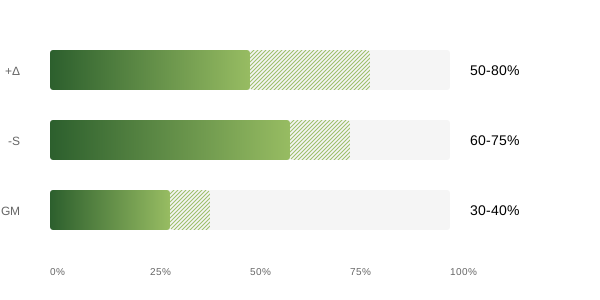
According to international research:
- Positive changes are observed in 50-80% of patients
- Significant reduction in spasticity is noted in 60-75% of children
- Improvement on the GMFM scale (Gross Motor Function Measure – a scale for assessing overall motor function) reaches 30-40%
Effectiveness of Combined Therapy
When stem cells are combined with erythropoietin:
- The effectiveness of therapy increases by 50% compared to stem cell monotherapy
- Results are three times better than with erythropoietin alone
- The recovery of motor function is accelerated
Safety and Potential Risks of Therapy
Safety Assessment of the Method
Clinical studies confirm:
- A strong safety profile for cell therapy
- Minimal risk of serious complications
- Good tolerability of the procedures by most patients
Potential Side Effects
Possible temporary reactions include:
- Local redness at the injection site
- A brief rise in temperature
- Headache
- Mild allergic reactions
Safety Monitoring System
To minimize risks, the following measures are taken:
- A thorough preliminary examination
- Continuous monitoring during therapy
- Regular follow-up observation after treatment is complete
- Prompt correction of any side effects that occur

Practical Recommendations for Making a Treatment Decision
When considering cell therapy, it is important to:
- Review the results of the latest clinical research
- Consult with several specialists
- Assess individual contraindications
- Choose a clinic with proven experience in cell therapy
Stem cell therapy represents a promising treatment approach for cerebral palsy, supported by numerous clinical studies. It's important to remember that treatment effectiveness depends on many factors, including the individual characteristics of the patient, the stage of the condition, and the expertise of the medical team.