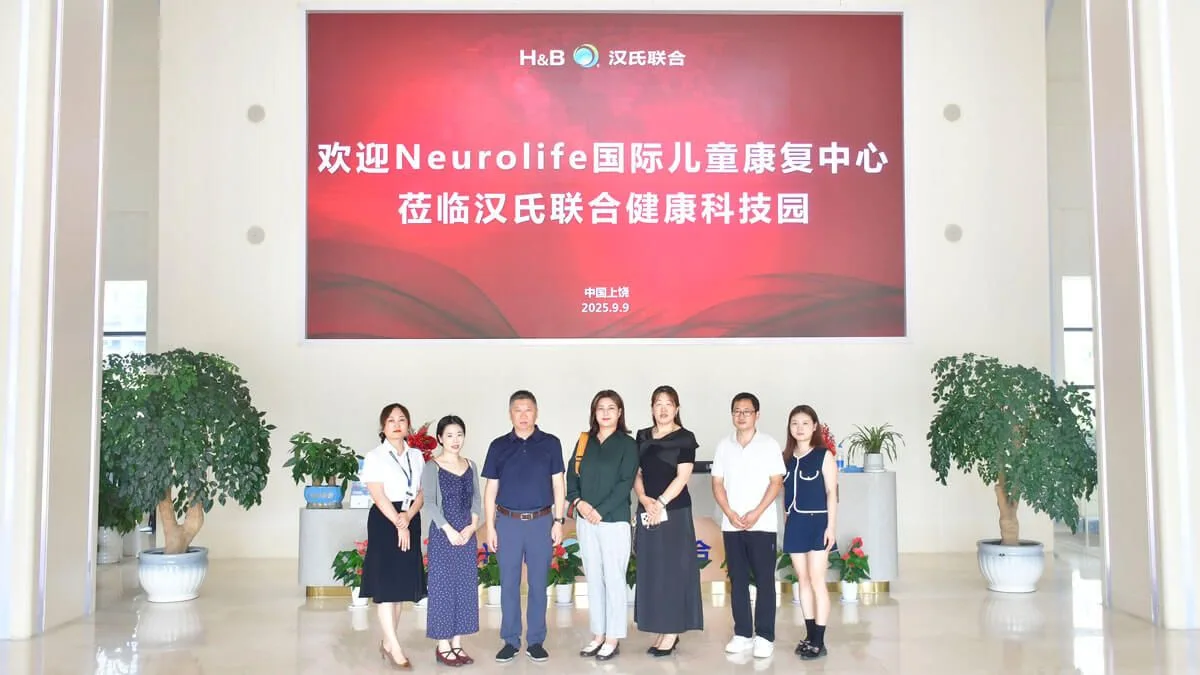
The search for effective ways to help children with autism has just received a powerful new boost. NeuroLife and Hansi United have combined their efforts on a significant project — building a rehabilitation center for children with autism, delayed speech development, and intellectual disability. To lay solid groundwork for this initiative, the two companies recently held a preliminary familiarization visit, which became the starting point for a deep and productive partnership.
Visit Details and Key Participants
The delegation was led by Ms. Hao Wei, head of NeuroLife. She was joined by the company's leading specialists: Dr. Bai Chunmei, who oversees the cerebral palsy (CP) program at NeuroLife's branch in Yuncheng, along with Yang Shipeng and Liu Shipeng, who lead the autism project at the company's subsidiary in Shenzhen.
During the visit, the NeuroLife team examined the infrastructure of the Stem Cell Medicine Technology Park in detail. They toured Hansi United Hospital, the Hansi Medical Center, and — most importantly — the core laboratory where stem cells are stored and prepared.
Sharing Expertise in Cell Technologies
The key topic of discussion was the prospects and practical aspects of applying stem cell technologies. The two sides discussed the development of cell-based products, the finer points of cell material preparation, and, of course, the practical application of these technologies in pediatric rehabilitation.
Studying standardized laboratory procedures, seeing the cell storage conditions firsthand, and reviewing real clinical cases gave the NeuroLife team a clear, complete picture of Hansi United's technical capabilities. This experience laid a solid foundation for continued collaborative work on the center for children with autism and other neurological conditions.
Prospects and Significance for the Future
This meeting was more than just a formal visit. It provided important support for integrating rehabilitation medicine resources and opened up new avenues for exploring modern approaches to autism intervention. Bringing together the expertise and technological capacity of two major companies raises hopes for new, more effective approaches to rehabilitation.
Finding effective solutions to help children with developmental differences is a complex, multifaceted process. When leading specialists pool their knowledge, the chances of success rise significantly. If you or someone close to you is looking for answers and considering modern treatment options, getting a professional consultation can be the first — and most important — step on that path.