Communication is one of the most important skills a child develops while growing up. Unfortunately, children with cerebral palsy (CP) often struggle with it. Brain injury sustained at birth or shortly after affects not only motor skills but can also cause a range of sensory, cognitive, and speech disorders.
Speech development is a complex process that requires the coordinated work of the brain, the muscles of the throat and mouth, hearing, and other systems. In children with cerebral palsy, this coordination is disrupted, which significantly complicates the development of their communication abilities.
Let's look at the main speech development challenges children with cerebral palsy face, and simple ways to help at home (under a specialist's guidance).
Main speech difficulties in children with cerebral palsy
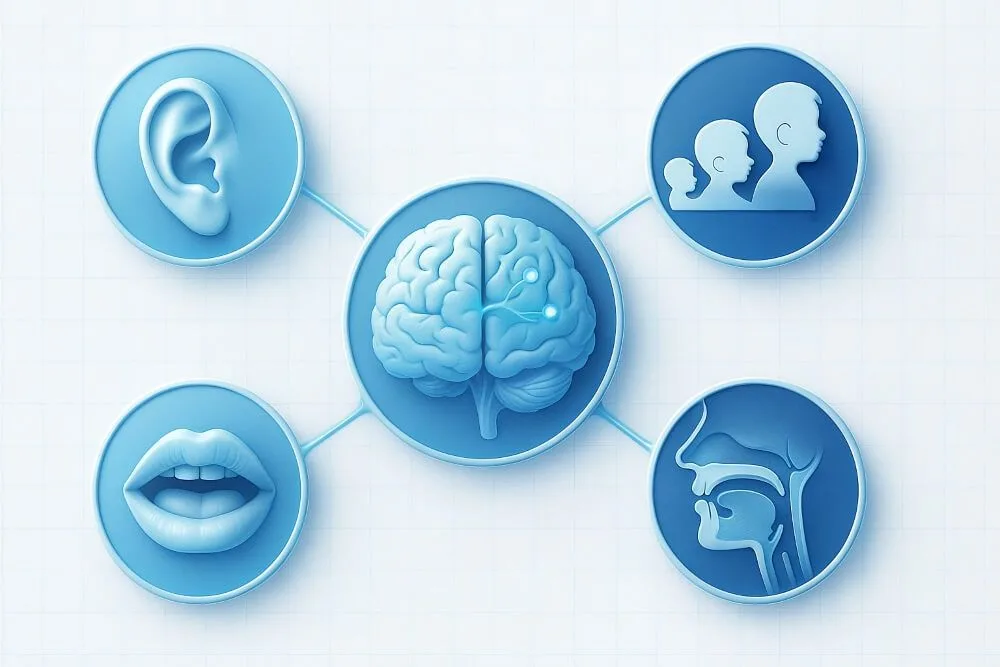
1. Hearing problems
Statistics show that 20-30% of children with cerebral palsy have some degree of hearing impairment, most often sensorineural (related to damage to the auditory nerve or inner ear).
This can directly affect speech perception and development.
2. Delayed speech development
Research points to a striking figure:
About 80% of children with cerebral palsy face delayed speech development.
They are slower than their peers to understand speech directed at them and to develop speaking skills. Common manifestations include:
- A limited vocabulary;
- Use of short phrases or single words;
- Unclear, slurred pronunciation;
- Poor comprehension of others' speech;
- General communication difficulties.
3. Articulation and phonological problems (sound production disorders)
70-80% of children with cerebral palsy have problems with sound production.
This is related to weakness in the muscles involved in breathing, voice production, and articulation (movements of the lips, tongue, and jaw), as well as poor coordination between them. Key signs include:
- Difficulty pronouncing individual sounds or groups of sounds;
- Distorted, slurred speech;
- Hypernasality (speech takes on an excessive nasal quality, or a "nasal twang").
4. Swallowing disorders
The motor impairments of cerebral palsy also affect the muscles responsible for chewing and swallowing. Because of abnormal muscle tone, delayed development of oral function, and impaired sensation in the face and mouth, problems often arise during the oral (in the mouth) and pharyngeal (in the throat) phases of swallowing. For example:
- The child chews food for a very long time;
- Swallows food or liquid not in one gulp but in several small ones (fractional swallowing);
- Frequently chokes while eating or drinking.
Home correction methods: small tips from a speech therapist
1. Use a multisensory approach to stimulate speech
Create varied sensory (visual, auditory, tactile) and speech stimuli in a playful format. This increases the child's motivation to communicate.
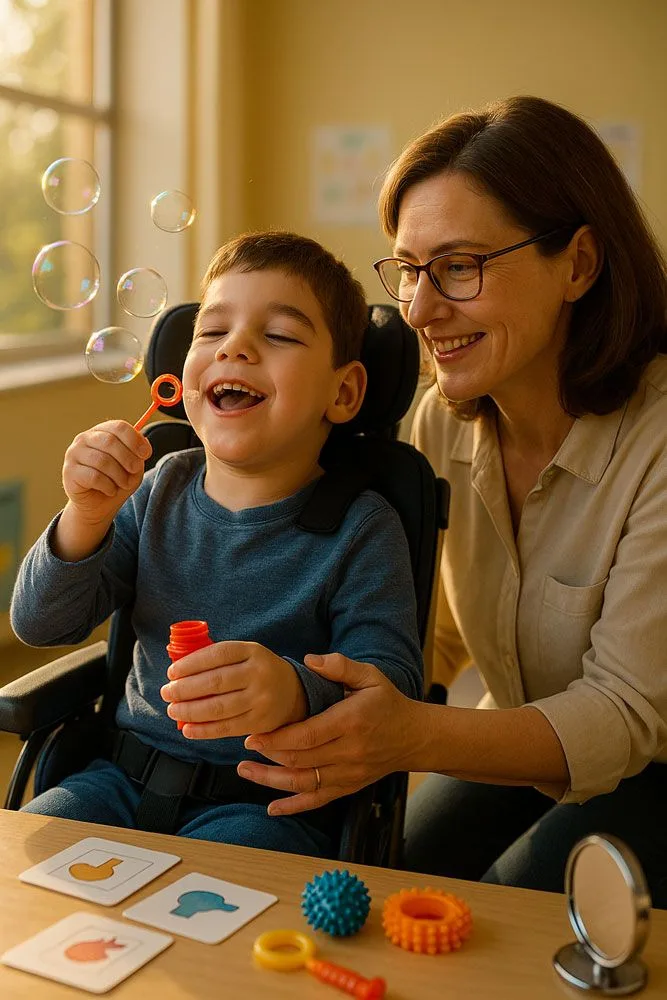
Example: bubble play
Take a bottle of bubbles, show it to the child, and ask with curiosity, "Oh, what's this?" Open the lid, drawing the child's attention. Blow bubbles, point at them, and say clearly, "Look, bubbles!" Then invite the child to try it themselves — opening the lid, blowing (if possible), and attempting to say the word "bubbles" or at least part of it.
2. Do exercises for the articulation muscles
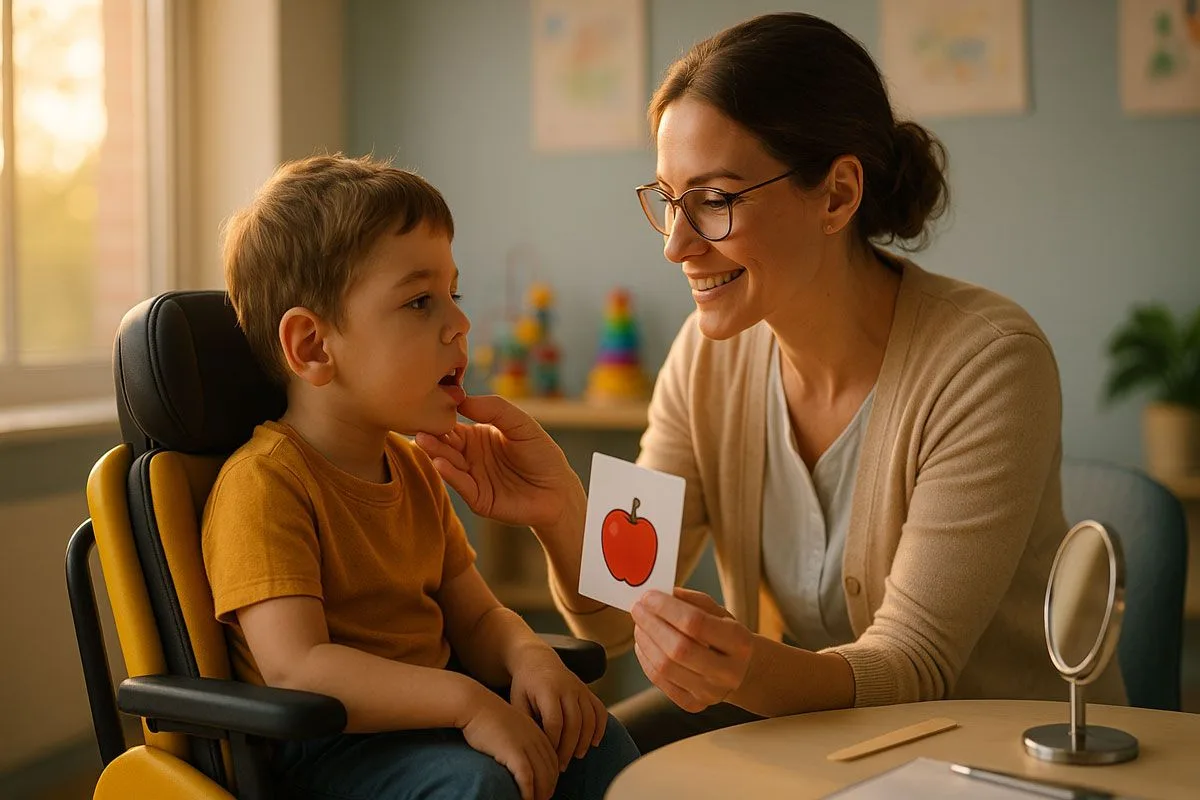
Train the lips, tongue, and jaw, focusing on your child's specific difficulties (as recommended by a speech therapist):
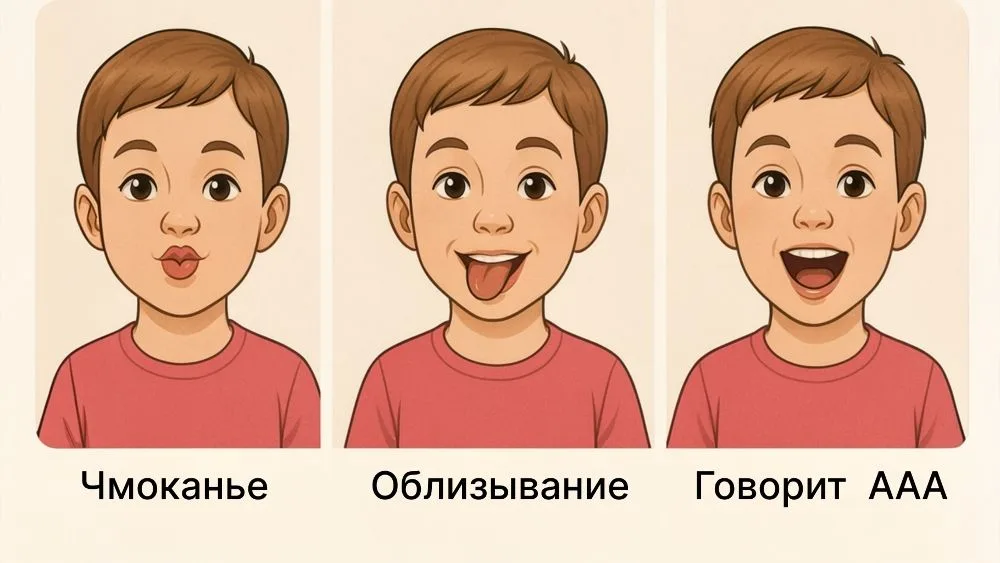
Lips:
- Light massage or vibration around the lips (special vibration massagers or simply fingertips can be used).
- The "kissing" exercise (imitating a kiss).
- Blowing soap bubbles, balloons, or simply puffing out the cheeks.
Tongue:
- Gentle cleaning of the tongue with a soft toothbrush (sides and surface) for stimulation.
- Licking safe objects (for example, a lollipop or a spoon with jam on it).
Jaw:
- Opening the mouth wide while saying the sound "Ah."
- Pursing the lips into a tube shape for the sound "Oo."
- Alternating movements and sounds: "Ah-Oo-Ee."
3. Train swallowing and chewing
Use foods of different textures (soft/hard, liquid/thick) and sizes (small/large) to improve swallowing, chewing, and tongue mobility.
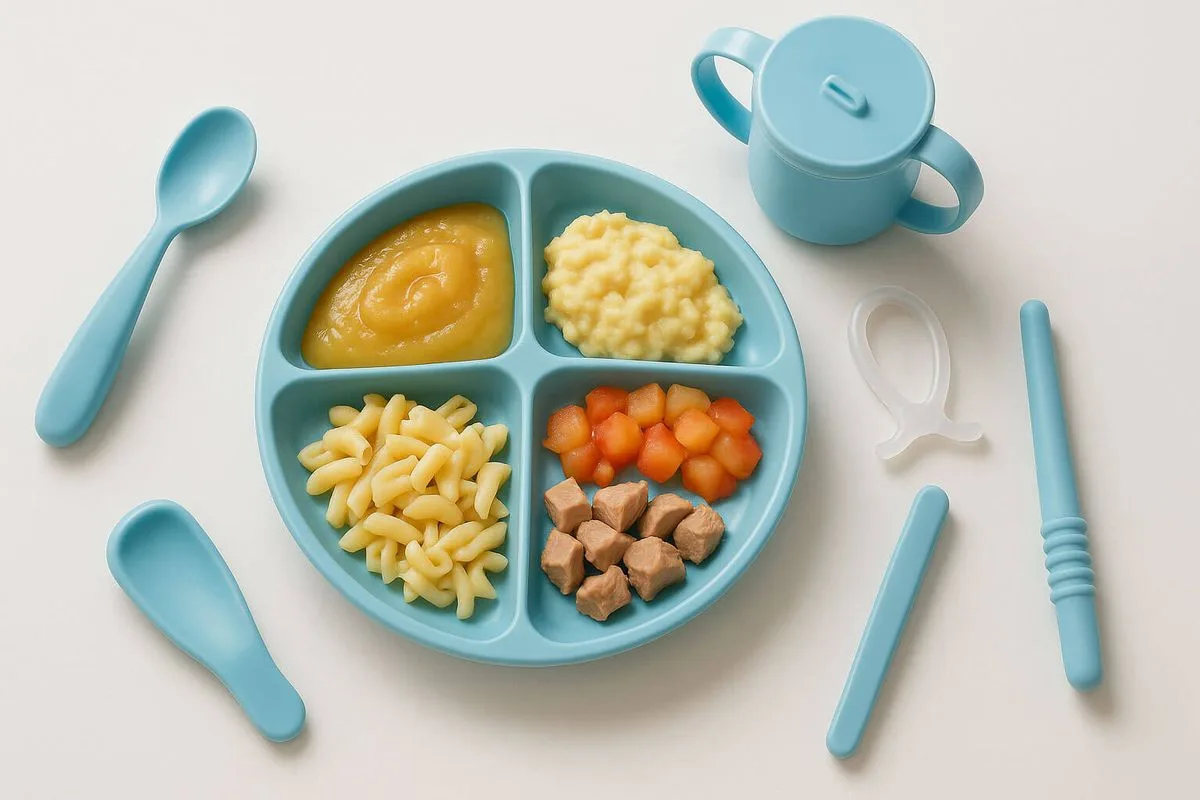
- Exercises (as prescribed by a specialist):
- Stimulating the chewing muscles: deep pressure, light tapping, or vibration in the area of the jaw muscles.
- Chewing on special rubber teething toys or safe hard foods (for example, dry toast or a piece of carrot — always under strict supervision!).
4. Create opportunities for communication
Don't limit yourself to spoken language alone. Actively use:
- Pictures (for example, PECS cards);
- Real objects;
- Gestures;
- Any augmentative and alternative communication (AAC) methods available to the child.
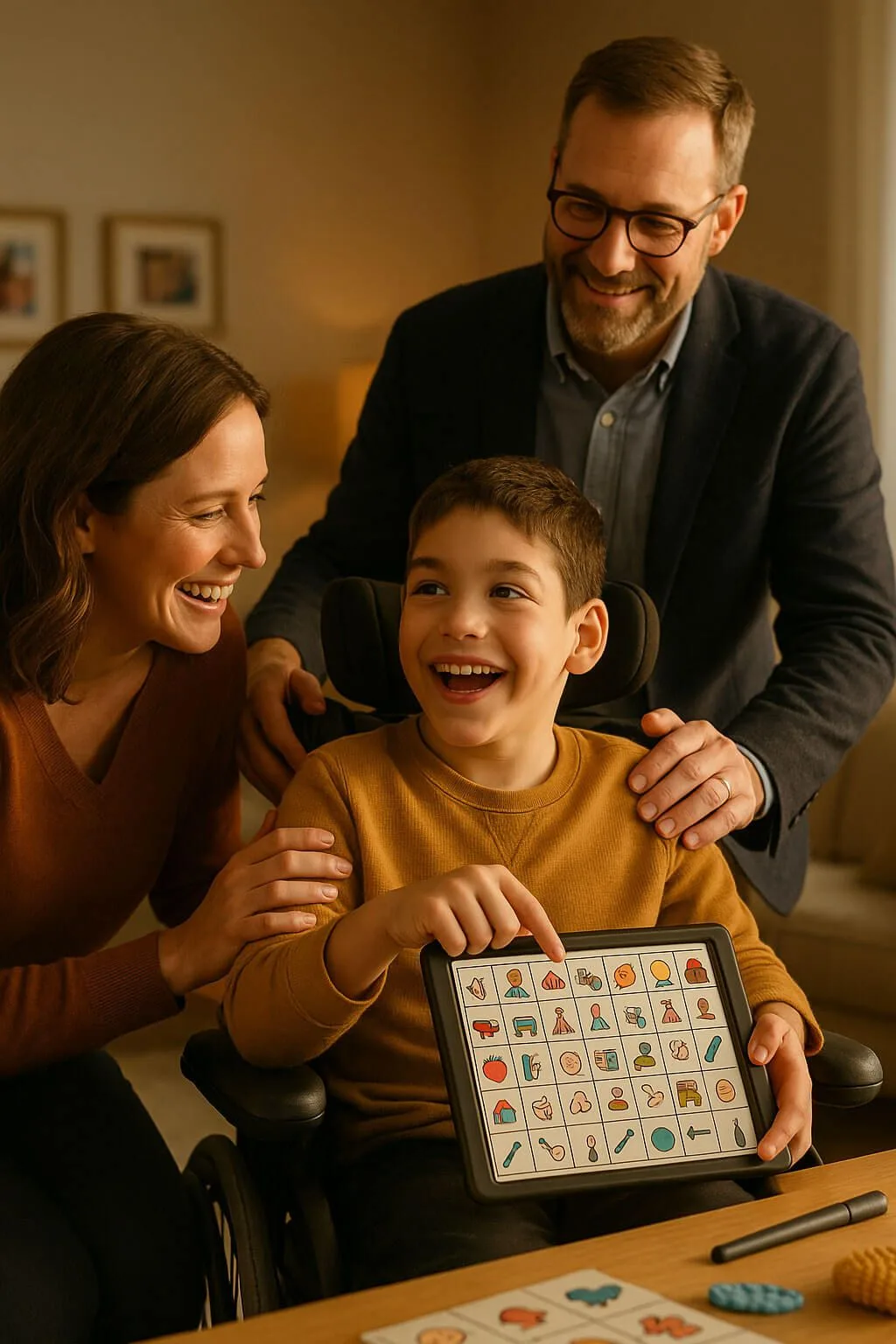
This helps the child express their wants and needs, reduces frustration, and allows them to adapt to different communication situations.
5. Remember how important parental involvement is
The success of speech therapy depends not only on the efforts of the child and the specialist, but also on the active support and involvement of the parents.
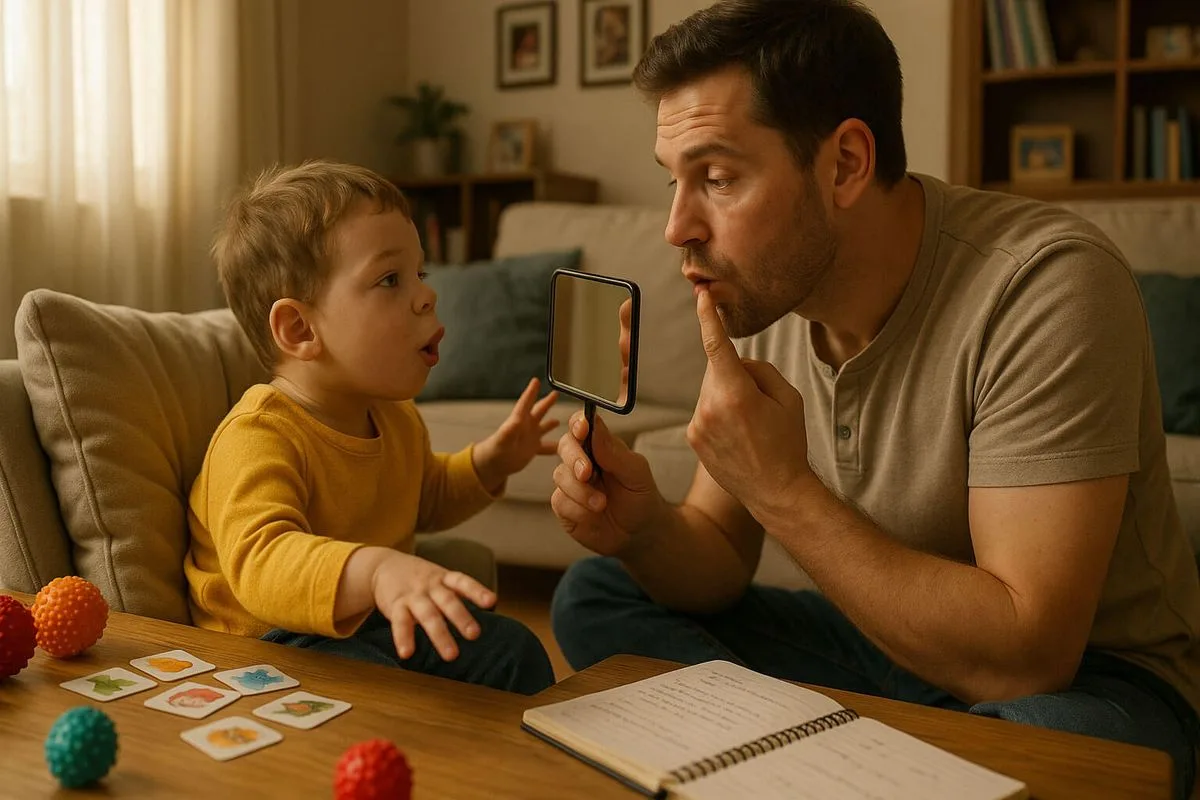
- Create a supportive, calm, and motivating environment at home.
- Involve other family members in the communication process and in doing exercises.
- Work closely with the speech therapist: ask questions, share observations, and try to apply the skills learned in the child's everyday life (during meals, play, and walks).
An individual approach is the key to success
We hope these general tips help parents and specialists working with children with cerebral palsy, contributing to better speech skills and a better quality of life. Speech therapy is constantly evolving, and specialists are always looking for new, effective treatment methods.
Remember that every child is unique. What works for one may not work for another. That's why individualized help, based on thorough diagnostics, is so important.
If your child with cerebral palsy is struggling with speech, sound production, or swallowing, don't put off seeing a specialist. Book a consultation with a speech therapist to get a professional assessment of your child's condition and develop a personalized correction plan.