As the school year begins, many parents run into worrying signs: teachers complain that the child can't sit still and gets distracted easily. At home, you notice he's inattentive while doing homework, fidgets constantly, struggles with writing, and skips or mixes up letters while reading.

Teachers are unhappy, the child is upset, parents are anxious — and grades still aren't improving. If this sounds like your child, don't rush to scold him. First, it's important to understand the underlying cause: is it a lack of motivation, or could it be a learning disability that's genuinely limiting what he's able to do?
What Are Learning Disabilities?
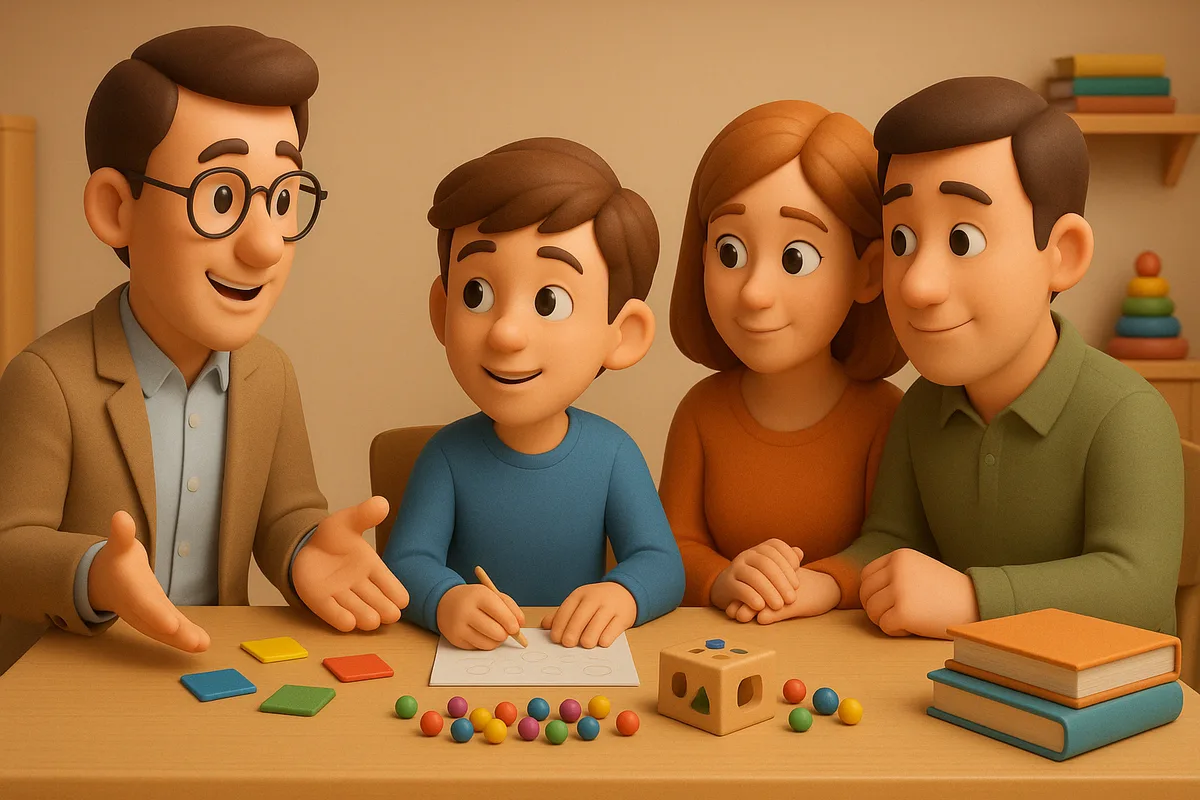
Children with learning disabilities often:
- Confuse left and right
- Reverse letters, words, or numbers
- Struggle to recognize patterns or sort objects by size and shape
- Have trouble following instructions and organizing themselves
- Forget what they just heard or read
- Move clumsily (coordination problems)
- Struggle with fine motor skills (writing, cutting, drawing)
- Don't understand the concept of time
According to the DSM-5 diagnostic manual, specific learning disorders include:
- Dyslexia (reading disorder) — problems with accuracy, speed, and comprehension of text.
- Dysgraphia (writing disorder) — errors in spelling, grammar, and the logical flow of writing.
- Dyscalculia (math disorder) — difficulty with number sense, memorizing arithmetic facts, and solving problems.
Other recognized types of learning difficulties include:
- Auditory processing disorder — trouble understanding sounds, filtering out background noise, and locating the source of a sound
- Language disorder — difficulty understanding spoken language, weak reading comprehension, trouble expressing thoughts
- Nonverbal learning disability — difficulty reading gestures or facial expressions, poor motor coordination, trouble following multi-step instructions
- Visual-perceptual disorders — writing errors (such as mirror writing), gripping the pencil too tightly, poor eye-hand coordination
By severity, learning disabilities can be classified as:
- Mild: minor difficulties in 1–2 areas
- Moderate: significant problems that require extra support at school
- Severe: multiple impairments; skills don't develop without individualized instruction
How to Recognize Learning Difficulties at Different Ages
Ages 3–4 (Preschool)
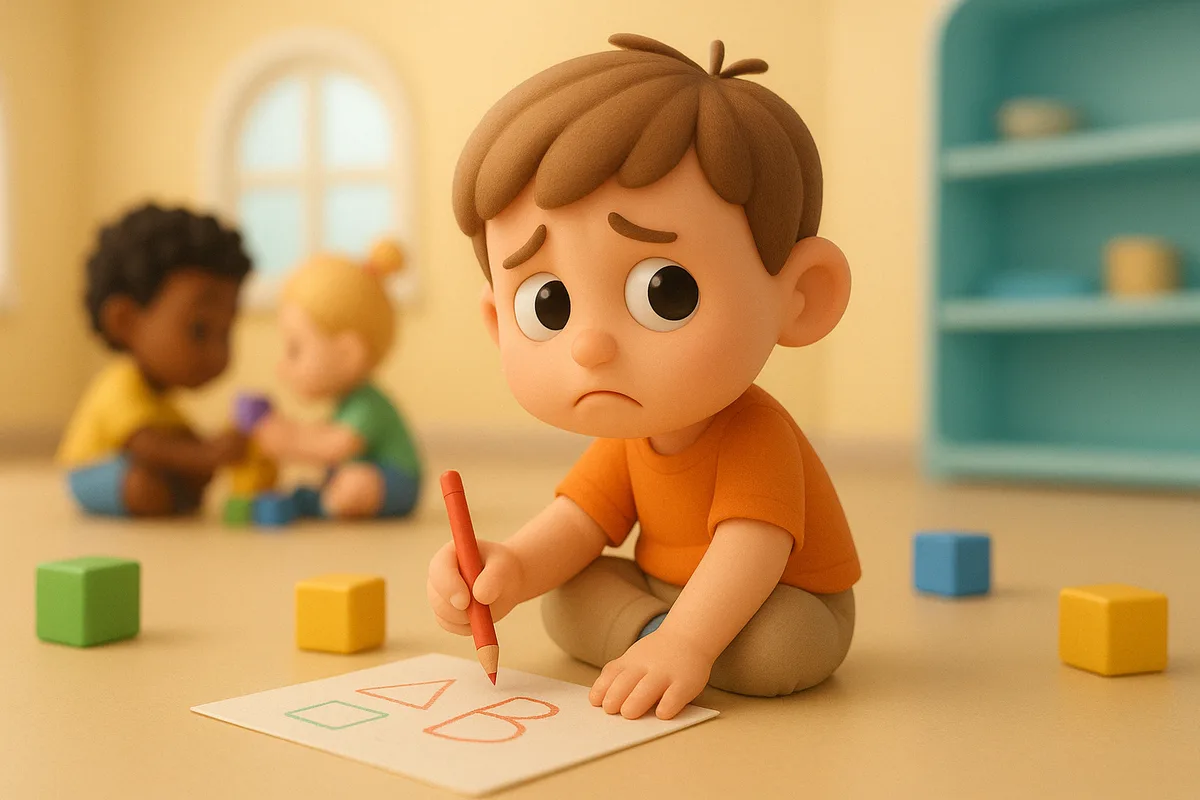
- Speech and pronunciation problems
- Trouble finding the right words
- Doesn't pick up on rhymes
- Doesn't remember numbers, letters, days of the week, colors, or shapes
- Can't concentrate
- Avoids peers
- Doesn't understand instructions
- Has trouble holding a pencil or scissors
- Can't button clothes, work a zipper, or tie shoelaces
Ages 5–9
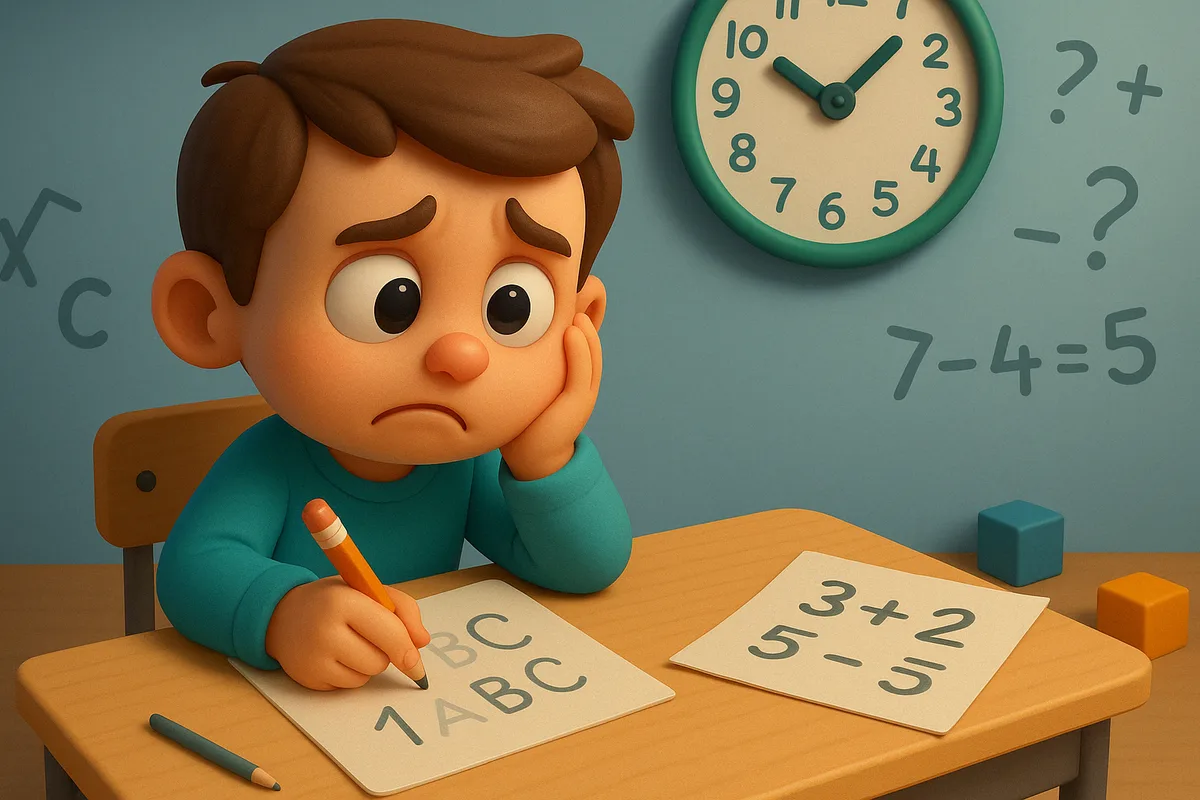
- Confuses sounds and letters
- Substitutes simple words ("run"/"walk")
- Reverses letters (b/d, p/q) and words (e.g., "was" and "saw")
- Doesn't grasp basic math concepts
- Has no sense of time
- Learns new material slowly
- Poor memory
Ages 10–13
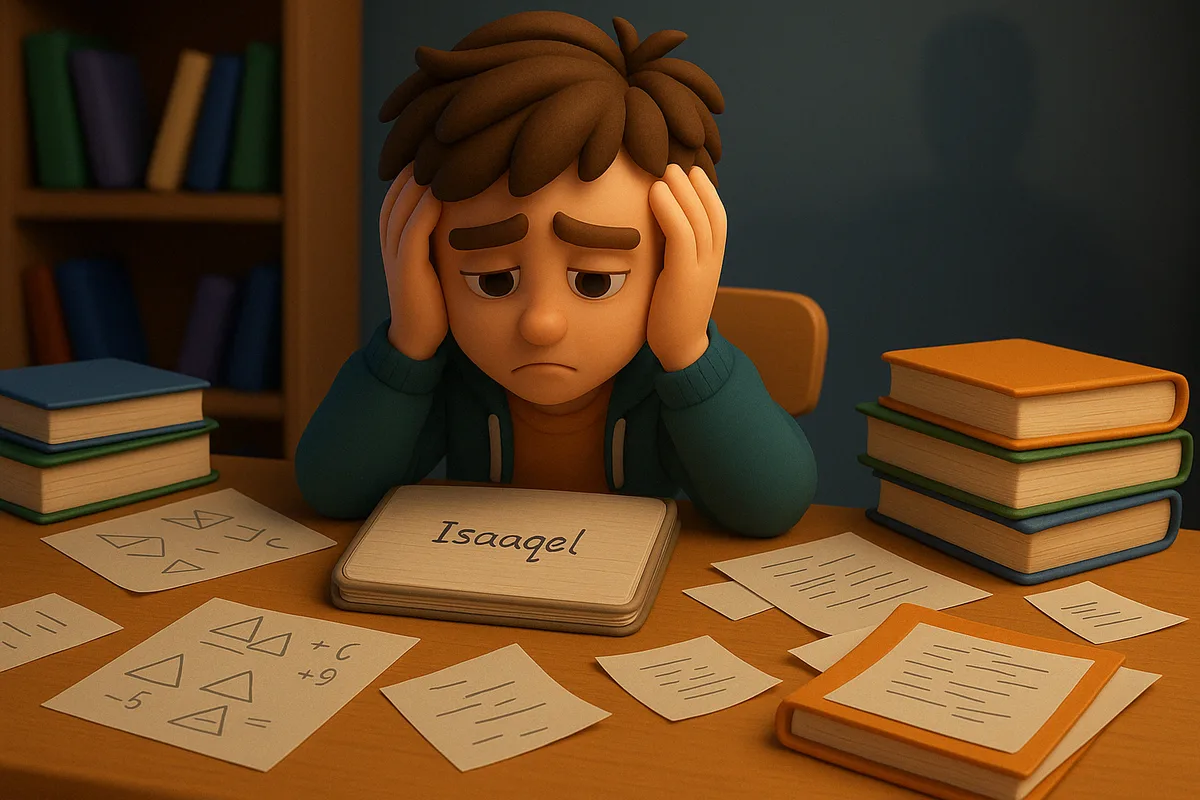
- Struggles with reading and math
- Mixes up the order of letters
- Disorganized (messy room, messy notebooks)
- Loses homework
- Illegible handwriting
- Can't manage time
- Can't express thoughts out loud
Ages 14+
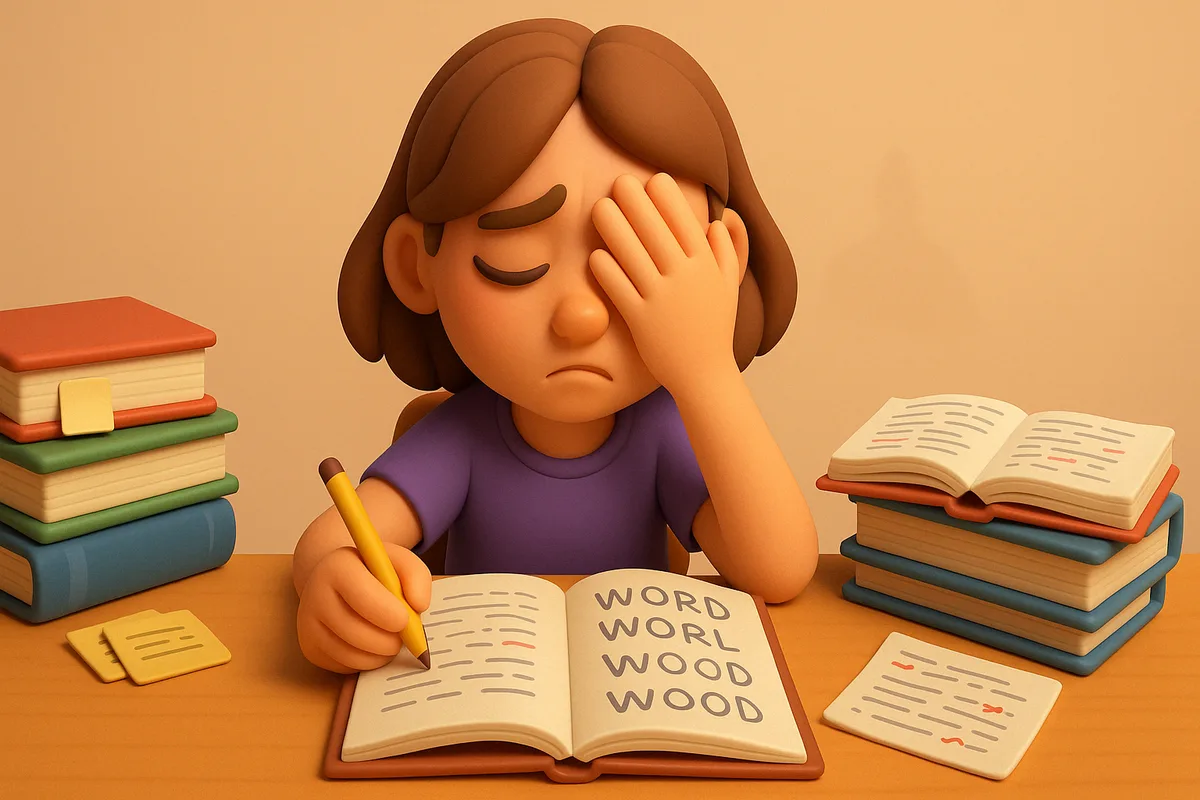
- Spells the same word differently within the same piece of writing
- Avoids reading and writing
- Can't answer open-ended questions
- Poor memory
- Adapts slowly to new situations
- Works at a slow pace
- Doesn't grasp abstract ideas
- Gets "stuck" on details
- Misinterprets information
How to Help a Child With Learning Difficulties
Children with learning disabilities often feel frustrated, even when they're trying their hardest. They may refuse to do schoolwork or act helpless. Sometimes these difficulties overlap with emotional conditions such as anxiety, depression, or ADHD, which makes diagnosis more complicated.
What You Can Do:
1. See a specialist:
- Have your child's vision, hearing, and general health checked
- Get a comprehensive evaluation from a psychologist, speech therapist, and neurologist
2. Don't delay getting help — early diagnosis and intervention matter, because these difficulties can get worse with age
3. Support your child:
- Give him chances to shine at the things he's good at
- Help with social skills if needed (sometimes support from a psychologist is warranted)
4. Work with the school — an individualized education plan may be needed
Conclusion
The most important thing for parents to remember: don't blame your child for learning difficulties. This isn't laziness or a lack of motivation — it reflects how his brain works, and it calls for a specialized approach.
If you've noticed these signs in your child, don't put off seeing a specialist. Timely diagnosis and the right intervention can help him overcome these difficulties and reach his full potential.