
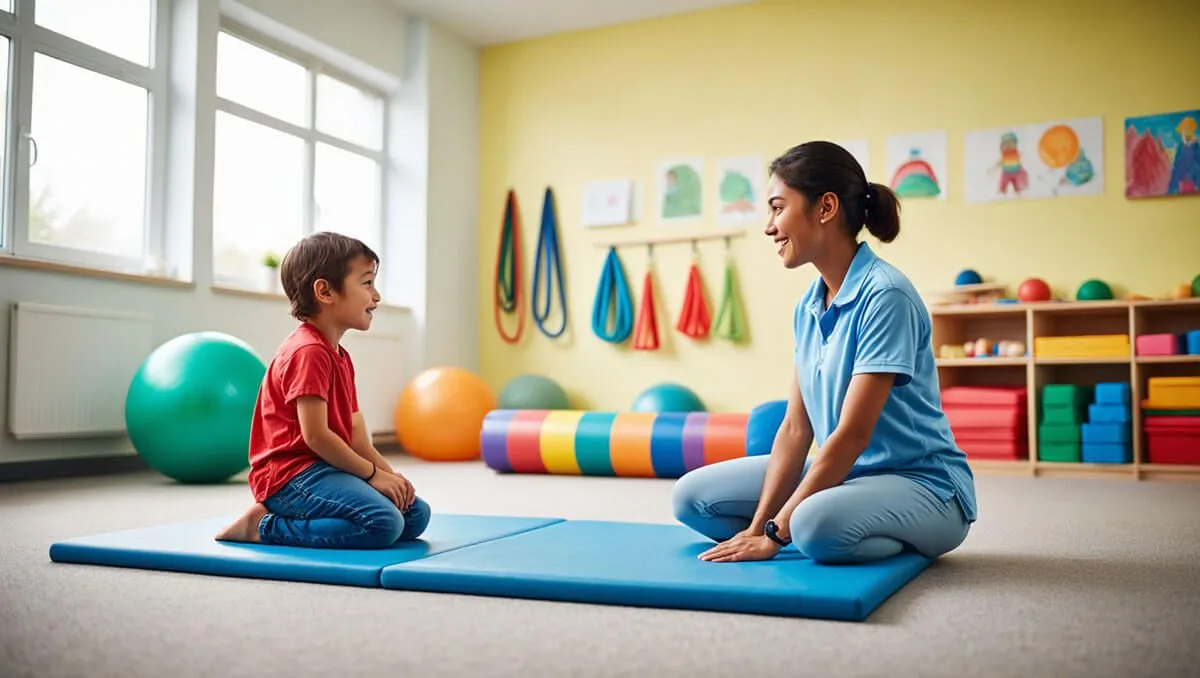
Sensory integration is the process that lets our brain organize the information coming in from the senses so we can interact effectively with the world around us. Disruptions in this process can significantly affect a child's daily life and development. Let's look at the main sensory integration methods that help children process sensory information more effectively and build the skills they need.
Effective exercises for sensory integration
1. Bouncing on a hop ball with handles
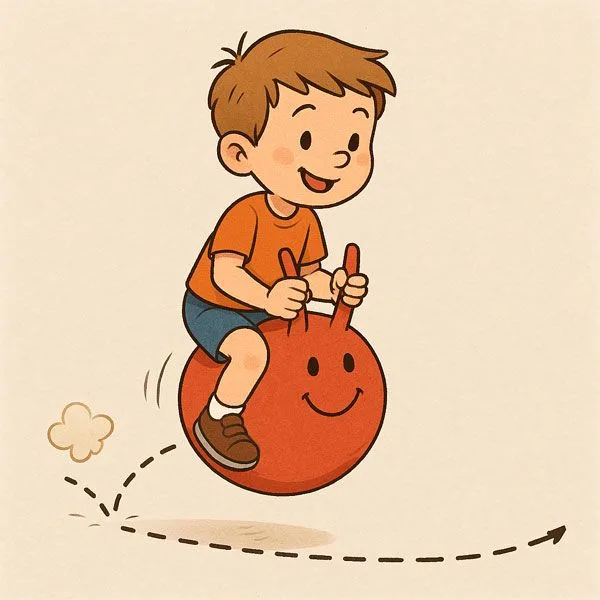
This exercise works as follows: the child sits on a special ball with "horns," holds onto them, and hops forward along a set path, controlling the direction of movement and the push-off force with the legs.
What this training develops:
- The body learns to work together on both sides
- Balance becomes steadier
- The eyes and movements start to "cooperate" better
- The child orients in space more easily
- The sense of gravity improves
- The brain learns to plan movements
2. Sliding on a scooter board (slide)
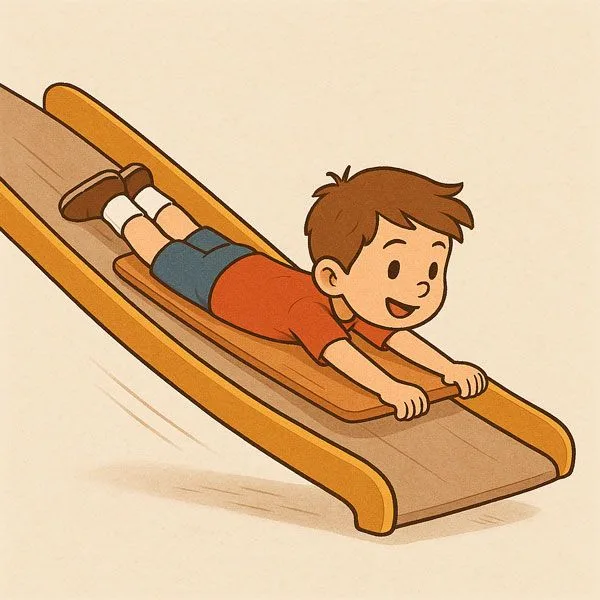
For this exercise, the child lies face-down on a scooter board, holds the edges of the slide, and glides down while coordinating the movements of the arms. It's important to extend the arms forward, keep the legs together, and lift the head.
What happens during this exercise:
- The brain learns to control the tonic labyrinthine reflex
- The body starts to sense speed of movement better
- The vestibular system (our internal "compass") gets a workout
- Even the brainstem is actively engaged
3. Standing on a balance platform
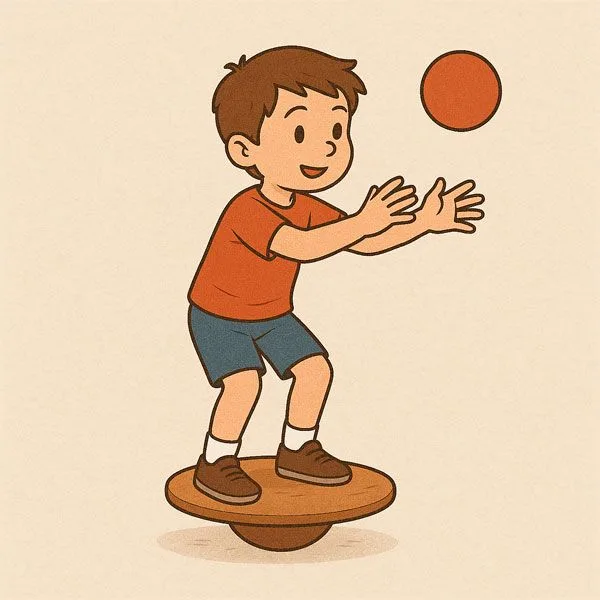
This exercise involves keeping balance on a special platform, rocking from side to side without falling. Extra tasks are often added, such as catching a ball while balancing.
What this trains:
- The brain learns to combine information from the balance organs and the muscles
- The sense of balance becomes as sharp as a tightrope walker's
- Attention focuses better than a spotlight
4. Trampoline jumping
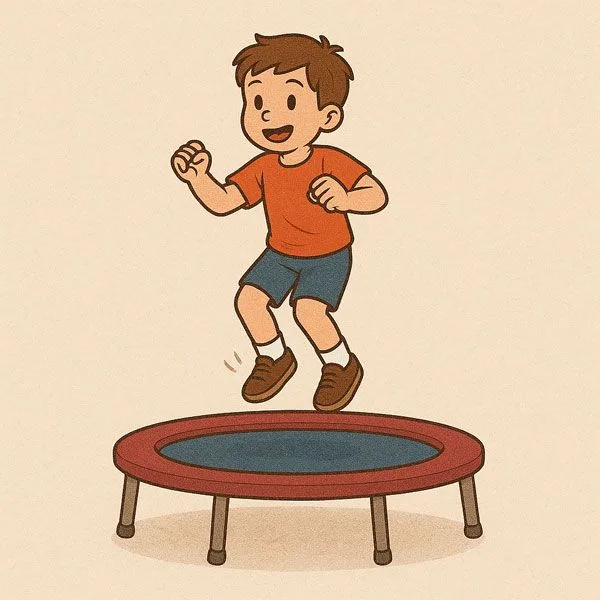
A simple but effective exercise in which the child stands on a trampoline and jumps on both feet.
What this fun workout develops:
- The balance system gets a powerful boost
- Oversensitivity to movement decreases
- The center of gravity becomes more stable
- The brain learns to plan movements better
5. Spinning in a suspended barrel
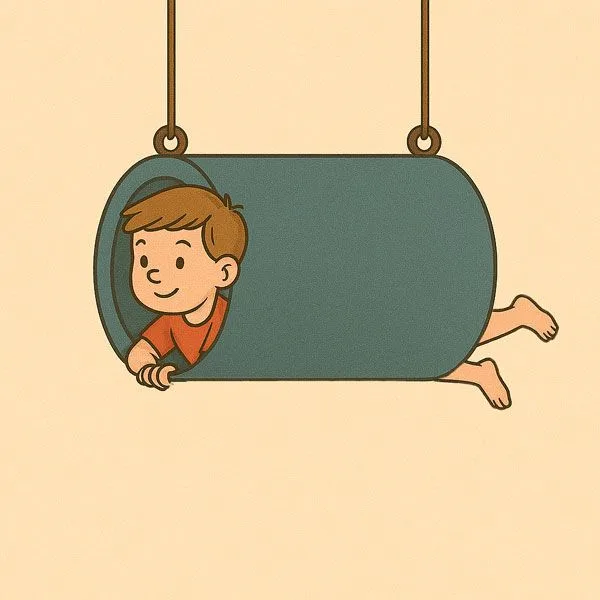
In this exercise, the child bends forward, wraps their arms around the barrel, and holds their balance while it spins in different directions — back and forth and side to side.
Which abilities does this build:
- The body becomes more coordinated
- The vestibular system works in sync
- The brain starts to accurately sense where each part of the body is in space
6. Sack jumping (like a kangaroo)

The child stands inside a special sack, holds its edges, and jumps forward on both feet, mimicking a kangaroo's movements.
What happens while jumping:
- Increased vestibular stimulation
- Reduced hypersensitivity
- Improved movement coordination
7. One-legged stool

This exercise is done sitting on a special one-legged stool. The child extends the arms and lifts the legs (crossing them or raising them one at a time), trying to hold their balance.
What this produces:
- Trains stability
- Improves coordination
- Develops the sense of gravity
- Strengthens vestibular function
8. Lying push-away with a ball
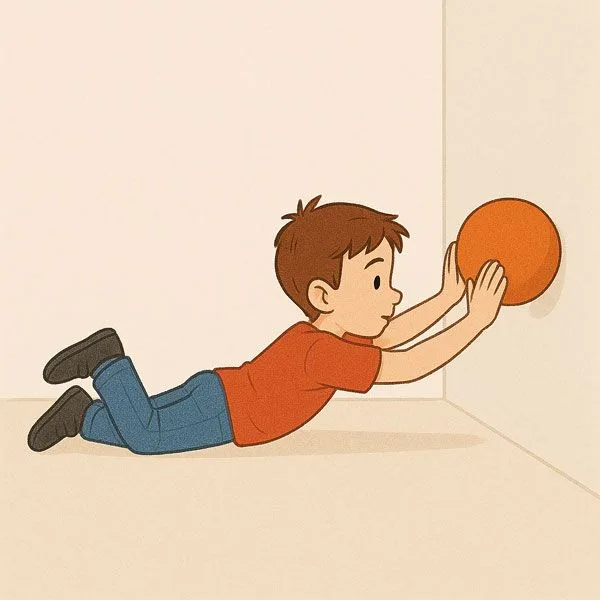
The child lies face-down in front of a wall, raises their arms, and pushes a ball off the wall.
What this trains:
- Strengthens neck muscles
- Improves movement coordination
- Boosts attention and concentration
Notes on applying sensory integration methods
It's worth noting that there are many additional training techniques beyond the ones listed above. Children with autism often show signs of sensory integration dysfunction through their behavior, but their progress with these exercises is typically less pronounced than for children with ADHD (attention-deficit/hyperactivity disorder). This is due to physiological features that make sensory challenges more complex.
Children with ASD (autism spectrum disorder) need more varied stimulation to help them develop an active ability to adapt to their surroundings. Many specialists believe that building internal motivation in these children ("I want to" / "I need to") can be a real breakthrough in corrective therapy.
Conclusion
Sensory integration methods are a valuable tool for working with children who have various developmental differences. However, it's important to remember that for maximum benefit, they should be combined with other rehabilitation methods.
Book a consultation with a sensory integration specialist to get a personalized program of exercises tailored to your child's needs.