The GMFCS Classification System: A Complete Guide for Parents of Children with Developmental Conditions
What is the GMFCS, and why does it matter for your child?
The Gross Motor Function Classification System (GMFCS) is an international standard for assessing motor activity in children with developmental conditions, including cerebral palsy (CP). It allows specialists and parents to pinpoint a child's level of motor ability and build an effective rehabilitation program around it.
A detailed look at the GMFCS motor development levels
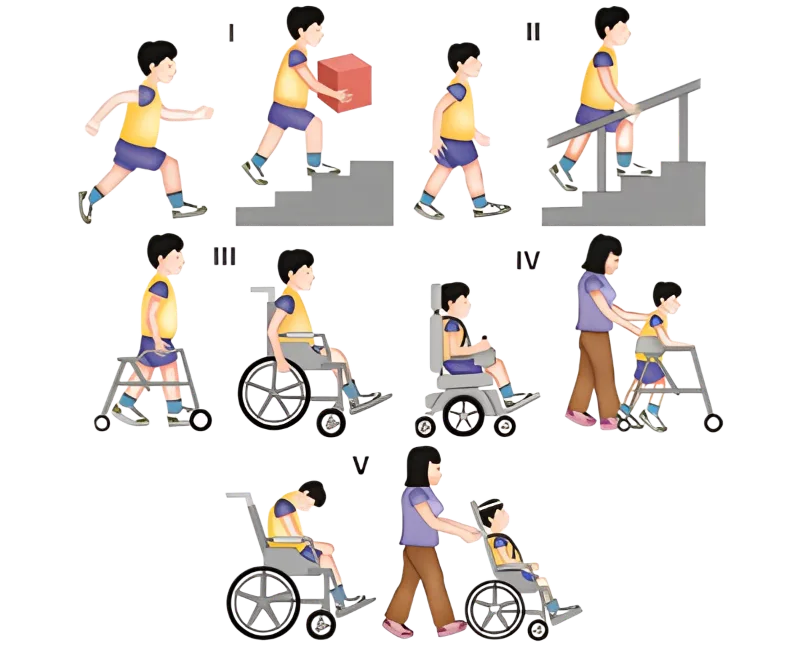
Level I: High degree of independence
Children at this level show motor skills close to the typical range for their age. They sit confidently without support and walk independently, without needing any assistive devices.
Level II: Moderate support needed for movement
At this level, children can sit independently and move short distances on their own. However, they may struggle with walking on uneven surfaces or covering longer distances.
Level III: Assistive devices required
Children have mastered crawling using their hands. They need support to sit and to stand. Movement mainly relies on a walker or other assistive device.
Level IV: Substantial need for support
At this level, children can control head position but need considerable support while sitting. Movement over short distances is possible only with help from an adult or specialized equipment.
Level V: Maximum support
Children require full support to hold up their head and body. Independent movement is extremely limited. A powered wheelchair becomes the primary means of mobility.
Putting the GMFCS to work in rehabilitation
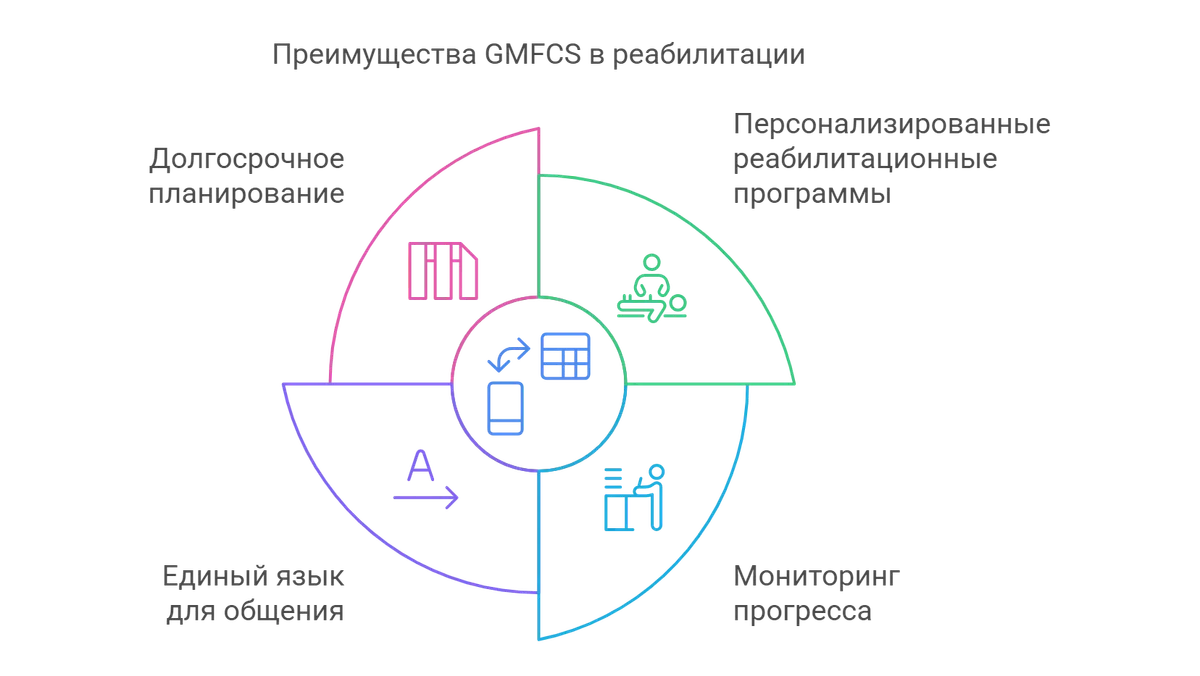
The GMFCS delivers four key benefits:
1. Building personalized rehabilitation programs
The GMFCS accounts for each child's individual characteristics, helping create programs that closely match their needs and abilities. This makes it possible to fine-tune therapy and achieve better results.
2. Tracking therapy effectiveness and monitoring progress in motor skills
Using the GMFCS lets you track a child's progress through rehabilitation. Specialists can assess changes in motor skills and adjust programs based on the results achieved.
3. Creating a shared language between all specialists and parents
The GMFCS gives everyone involved in the rehabilitation process — doctors, therapists, and parents — a common terminology. This makes communication easier and improves the exchange of information about the child's condition and needs.
4. Enabling long-term planning of rehabilitation measures
The GMFCS allows specialists to build long-term rehabilitation plans that account for the child's expected development. This helps identify the necessary steps and resources ahead of time to reach the set goals.
Age-specific application of the GMFCS
The system takes into account five key age periods in a child's development:
- Birth to 2 years
- 2 to 4 years
- 4 to 6 years
- 6 to 12 years
- 12 to 18 years
This breakdown lets specialists assess a child's motor abilities more precisely at each stage of development and adjust the rehabilitation program to match age-specific characteristics.
Scientific basis and international recognition
The GMFCS was developed by the International Society of Pediatric Neurology (ICSPN) based on years of clinical research and observation of children with cerebral palsy. This makes it a reliable tool for assessing motor function and planning rehabilitation measures.
The road ahead for the GMFCS
Using the GMFCS opens up new possibilities for improving the effectiveness of rehabilitation for children with motor impairments. It helps create optimal conditions for a child's development and for reaching the highest possible level of independence in everyday life.