Imagine you're learning to ride a bicycle. You need to pedal, keep your balance, look ahead, and steer, all at the same time. How does your brain manage all of that? The answer is simple: thanks to sensory integration!
What Is Sensory Integration?
Sensory integration is the brain's ability to process information coming from all the senses (sight, hearing, touch, taste, smell, as well as the sense of balance and body position in space) and use it to coordinate movements and actions.
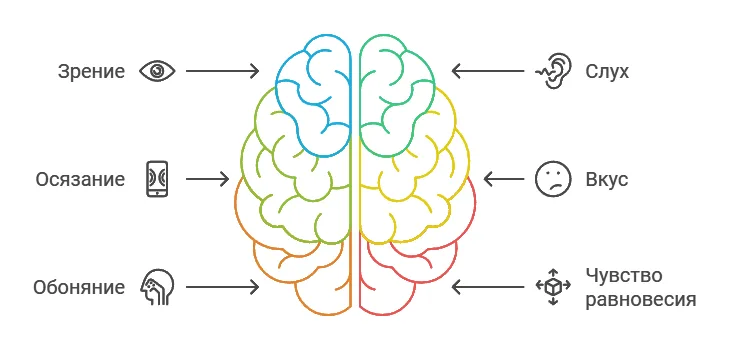
Sometimes this process breaks down. This is called a sensory integration disorder. Think of the brain as an orchestra, with the senses as musicians. If the musicians play out of sync, you get a cacophony. The same happens with the brain: if it can't properly process information from the senses, it can lead to problems with coordination, learning, and behavior.
Why Does This Happen?
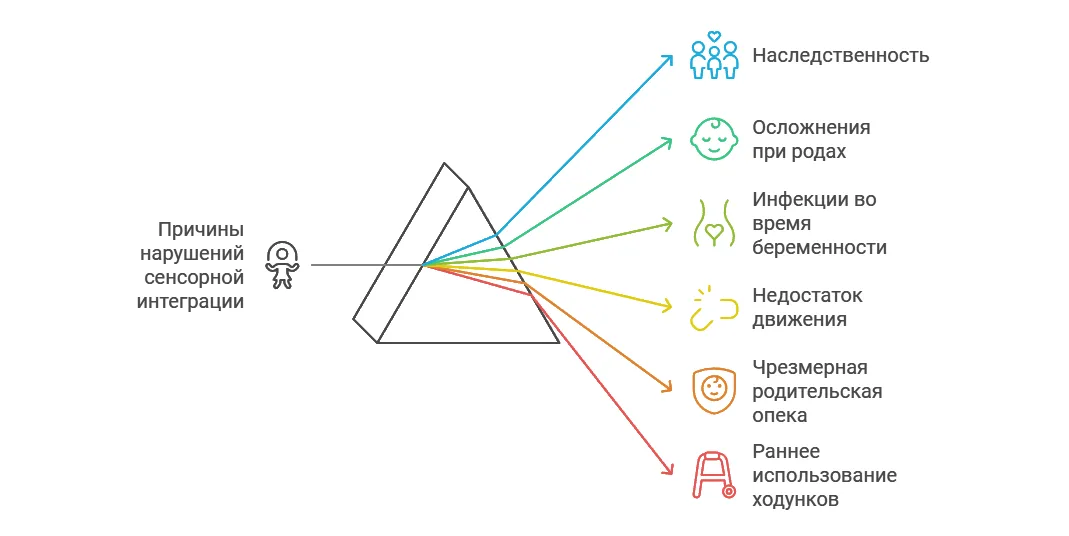
The causes can vary:
- Heredity: A predisposition to sensory integration disorders is sometimes inherited.
- Birth complications: For example, if a child was born prematurely or with low birth weight.
- Infections during pregnancy: Certain infections can affect a child's brain development.
- Lack of movement: If a child moves too little, their brain doesn't receive enough sensory information for proper development.
- Overprotection: When parents shelter a child too much, the child doesn't get the chance to explore the world independently and develop their senses.
- Early use of baby walkers: Walkers limit a child's natural development of movement.
How Can You Tell If a Child Has a Sensory Integration Disorder?
Symptoms vary, but they can be grouped into several categories:
1. Problems with Regulating Sensitivity:
Imagine the child has an internal "volume dial" that isn't working properly. It can be either too "loud" (hypersensitive) or too "quiet" (hyposensitive).
- Difficulty concentrating: The child struggles to focus on one thing and is easily distracted.
- Emotional swings: Mood can change very quickly and without an obvious reason.
- Dislikes being touched: May dislike hugging, having their hair washed, haircuts, or brushing their teeth, because these sensations feel unpleasant to them.
- Fear of loud sounds: May be frightened by a vacuum cleaner, hair dryer, or siren.
- Fear of heights: Dislikes swings and slides, afraid of falling.

What to do?
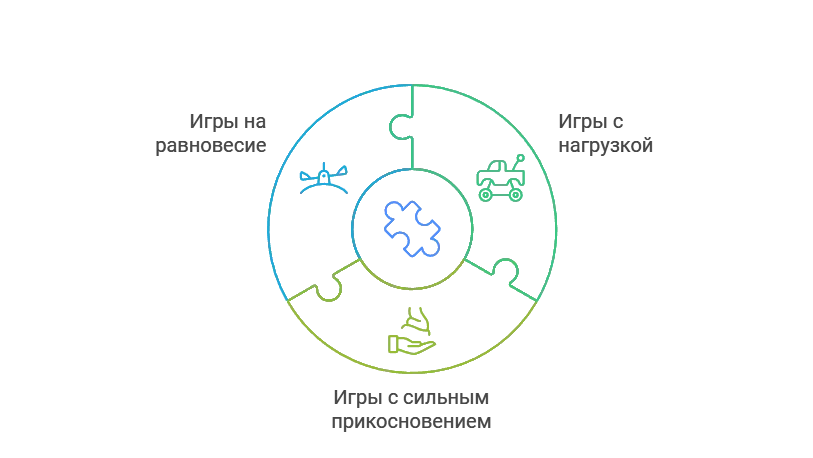
- Games with heavy work: Games that involve pushing, pulling, or lifting weights (age-appropriate, of course). For example, tug-of-war or ball games.
- Games with firm touch: For example, tight hugs, massage, or playing with play dough or clay.
- Balance games: Swings, merry-go-rounds, walking along a curb.
2. Problems with Recognizing Sensations:
This is when the brain can't accurately identify what it's feeling.
- Clumsiness: The child may often trip, drop things, or have poor movement coordination.
- Difficulty maintaining posture: May slouch or sit in an uncomfortable position.
- Vision-related problems: May skip letters or lines while reading, or have poor spatial orientation.
What to do?
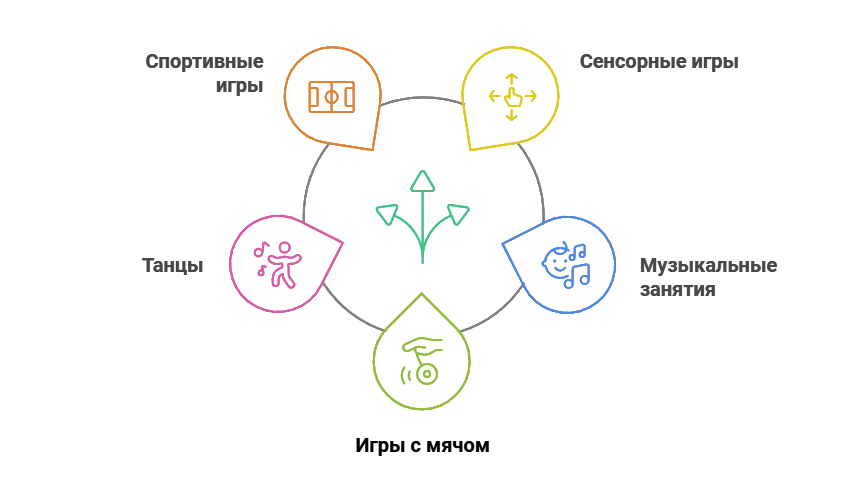
- Games that stimulate different senses: For example, finger painting, playing with dried grains or beans, listening to music.
- Exercises that build coordination: For example, catching a ball, dancing, sports games.
3. Problems with the Vestibular System:
Inside our inner ear there is a special system (the vestibular system) that helps us keep our balance and understand how our body is positioned in space. When this system doesn't work properly, it sends inaccurate or uneven information to the brain.
Imagine you have two balance sensors (one in each ear), and one of them starts giving incorrect readings. The brain receives different information from the right and left sides and can't figure out how the body is actually positioned. Because of this, a person may:
- feel like everything around them is spinning
- lose their balance
- have trouble walking
- feel nauseous
- feel unsteady
This is similar to how you feel after spinning around for a while and then stopping suddenly, except that with a vestibular disorder, this state can arise without any obvious reason and last much longer.
The vestibular system is our internal balance system. If it isn't working well, a child may:
- Be hyperactive: Constantly moving, running, jumping.
- Fall often: Because of a poor sense of balance.
- Confuse left and right: Have difficulty with spatial orientation.
- Love spinning: Constantly seek out the sensation of rotation.
What to do?
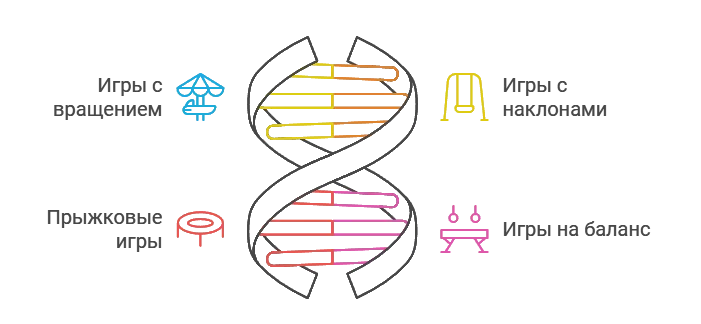
- Spinning games: Riding a merry-go-round, spinning on a chair, hula hoop games.
- Tilting games: Swings, slides, rolling on a ball.
- Jumping: On a trampoline, jumping rope, or simply jumping in place.
- Balance games: Walking on a balance beam or along a curb, riding a bicycle.
Other Signs:
- Learning difficulties: Problems with reading, writing, math.
- Behavioral problems: Impulsivity, aggression, nail biting, screaming for no apparent reason.
- Difficulty communicating: The child may be withdrawn and avoid interacting with other children.
What's Important to Remember?
A sensory integration disorder is not a life sentence. It can, and should, be worked on! The earlier you start, the better. Parents play a huge role in this process. Play with your child more, involve them in different kinds of activities, and help them explore the world through their senses.
Regular sessions and close observation of your child will help you notice improvements in time and adjust the program as needed. Together, you will succeed!